ARKTP Studios
Creative Strategy · Product Design
Curiosity begins where cultural change becomes product.
Who we are
We turn what is changing in culture into a concrete direction for the product.
We do not chase trends: we look for what generates them. We watch how behaviour, desire, ritual and the relationship with objects change. Then we bring that reading inside the identity of the maison, to understand what can evolve without losing recognisability.
For us design does not begin with form. It begins with a question.
Why should this object exist today?
Cultural reading
We look at what generates change, before it becomes a trend. Always through the identity and the audience of the maison.
Archetype, not trend
Before style we define what the object must be: a principle able to generate products, families and continuity over time.
All the way to the material
Materialls, components, hardware, prototypes. It is in the material that a vision proves it can become a product.
The DNA of the process
From cultural reading to product strategy.
Every maison owns codes that built its identity. But no code lives in a vacuum. The way we travel, work, live, buy and show ourselves changes. What we carry with us changes. The meaning of objects changes.
A gap can open: society moves, the product stands still. ARKTP works in that gap.
On one side we read cultural transformation. On the other we know the reality of industrial decisions: categories, collections, calendars, materials, workshops, prototypes and costs.
Choose a phase
01Observe
We do not observe trends: trends are already consequences. We look for what comes before them. How does the life of a maison’s audience change? Which gestures disappear? Which rituals emerge? Which objects must change meaning?
We always observe from the brand’s point of view: who has always chosen it, who is approaching it today, who might recognise themselves in the maison tomorrow.
Behaviour comes before the product.
02Recognise
Every maison carries a heritage of codes: proportions, materials, gestures, constructions, details.
Our work is to tell what truly belongs to the identity from what belongs only to habit.
Identity codes must keep living, even under new tension. Habits can be abandoned. Without this distinction, change erases identity or tradition becomes immobility.
To evolve is not to cut the roots. It is to make them produce something new.
03Graft
Innovation rarely comes from inside a single category.
That is why we look at automotive, architecture, sailing, workwear, technology, outdoor, art, music and urban culture.
But a graft is not a moodboard.
A car interior can suggest a new way of organising space. Technical protection can generate a construction. A salvaged sail can change the relationship between material, memory and durability.
An outside language enters the project only when it produces a function, a behaviour or a constructive possibility.
We do not take images from other worlds. We transfer their intelligence.
04Archetype
Cultural reading becomes structure.
Before style we define what the object must be: what it holds, how it opens, how it is carried, how it protects, how it transforms, which gesture it generates.
This is how the archetype is born.
Not a final shape, but a principle able to generate a family of products and cross several seasons.
Style can change. The archetype must hold.
05Strategy
An archetype becomes truly interesting when it can generate a system.
We define the founding product, the category from which to introduce the new language, the extensions that follow and the constant elements that keep the identity recognisable.
But we do not replicate.
Every category calls for a new interpretation: a construction born for a trunk cannot simply be scaled down into a bag.
Coherence is not repetition. It is belonging to the same thought.
06Material
In the end everything has to reach the hands.
Materialls, thicknesses, hinges, hardware, joints, stitching, proportions, mechanisms, prototypes.
This is where the vision is put to the test.
The identity of a product does not live in the silhouette alone. It lives in the sound of a closure, in the strength of a hinge, in the way a handle meets the hand, in the precision with which two materials come together.
This is where the vision becomes physical. And it is from here that the road to production begins.
Culture → Code → Graft → Archetype → Strategy → Materiall
ARKTP works in the territory between strategy and product.
A strategy consultancy can stop at the vision. A style studio can start from the shape. We enter through meaning and arrive at the material, staying responsible for the passage from intuition to archetype, from archetype to prototype.
From prototype to production
Where the vision becomes a repeatable object.
The Materiall phase does not end with a good prototype.
The prototype proves the object can exist. Production has to prove it can exist a hundred, a thousand times, holding quality, function, cost and lead time.
Between the two there is an iterative process: any test can send you back to the prototype. That is not a failure. It is part of the design.
Choose a step
01Prototype
The first complete physical example.
Not a shape model, but an object that opens, loads, is carried, is used, and can also break.
It exists to find out what drawing cannot tell: where the hand looks for support, where space is missing, which gesture is natural and which one does not work.
Any test can send you back to the prototype. That is expected: designing also means correcting.
02Validation
Three checks, one goal: to make the project repeatable.
Materialls. Abrasion, colour fastness to light and rubbing, durability of finishes, behaviour of joints over time. But also real availability, batches and minimum order quantities.
Components. Zips, closures, wheels, handles, frames and hardware are tested through opening, load, fatigue and corrosion cycles. This is where we decide what can be off the shelf and what has to be developed from scratch.
Assembly. The product is put together following the workshop’s real sequence, checking tolerances, clearances, order of operations and working times.
We do not validate a good piece. We validate a process able to repeat it.
03Industrialisation
Tooling, cutting dies, pilot moulds, control jigs. Then the pilot run, built under real production conditions and no longer under sampling conditions.
This is the moment the project finally meets the numbers: bill of materials, industrial cost per variant, minimum order quantities, working times, production and delivery calendar.
Production technique is settled together with the workshop: work instructions, quality control points, acceptance criteria and training.
Industrialisation makes the project repeatable even when the designer is no longer in the factory.
Scope
Four territories, one method.
Women’s leather goods
Frame bags, evening clutches, vanity cases and hardware. From the architecture of the collection to the construction of the product: leathers, closures, components and supplier development.
Men’s leather goods
Briefcases, backpacks and small leather goods. Constructions, technical linings and hardware families developed as a system, from prototype to production.
Luggage and travel
Hard and soft luggage, trunks and modular systems. Shell, pull system, wheels, handles, interiors and mechanisms are designed as parts of a single architecture.
Special projects
Automotive, protection, sailing and technical materials are not extra categories: they are part of our design culture. From Mercedes-Benz finishes to Dainese protection, through to Slam sailcloth.
Portfolio
Five maisons. Five ways of turning an intuition into a product system.
Fregoli
Malle-coiffeuse and women’s leather goods. A trunk that becomes furniture; a lily of the valley that turns from drawing into construction and hardware.
2008–2014 · 9 images and a film · Open the sequenceFerragamo
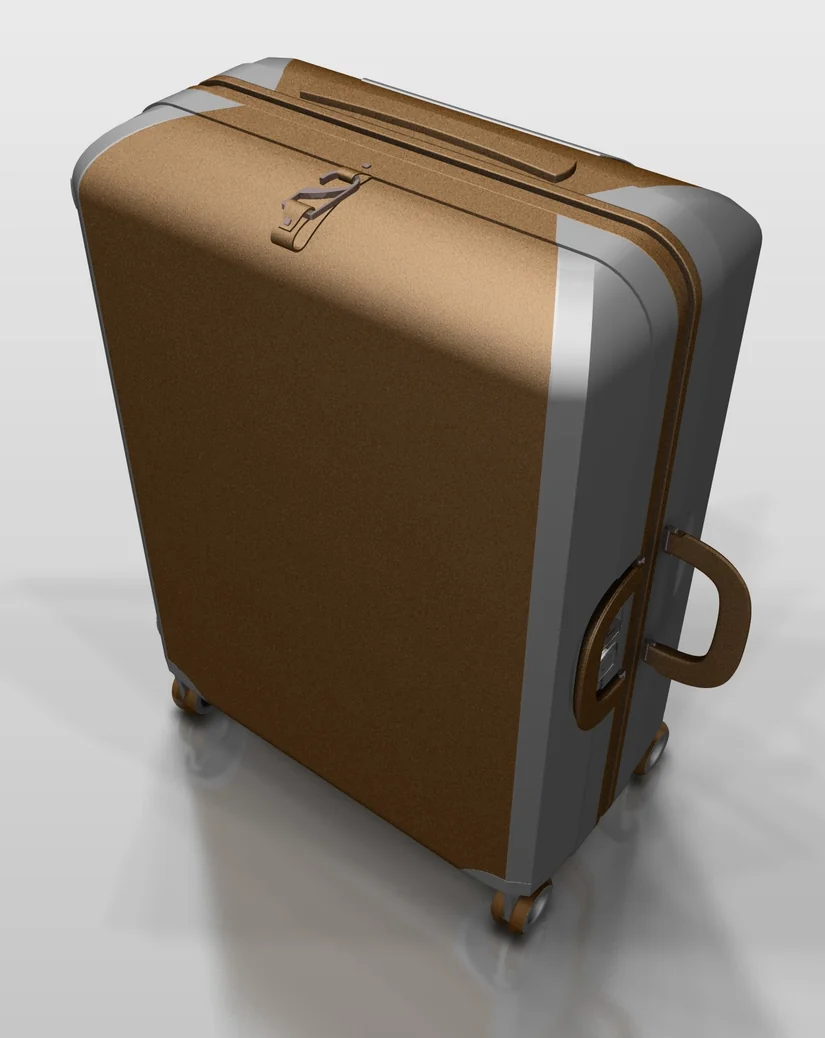
An architecture for travel. Leather, aluminium, pull system, handles and wheels designed as parts of the same system.
2014–2016 · 13 images and a film · Open the sequenceLoro Piana
Two constructions, one identity. Hard luggage in hand-grained leather and soft bags in deerskin, held together by a shared hardware family.
Study · 6 images · Open the sequenceLouis Vuitton
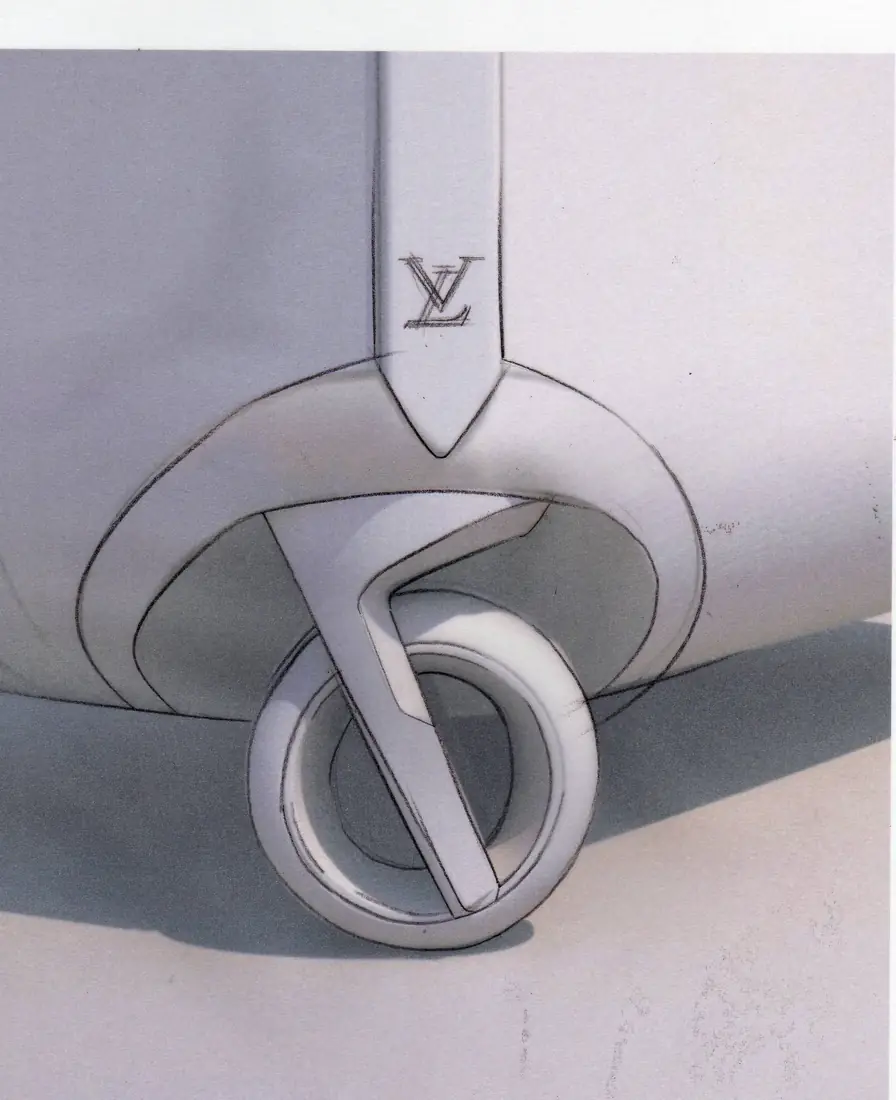
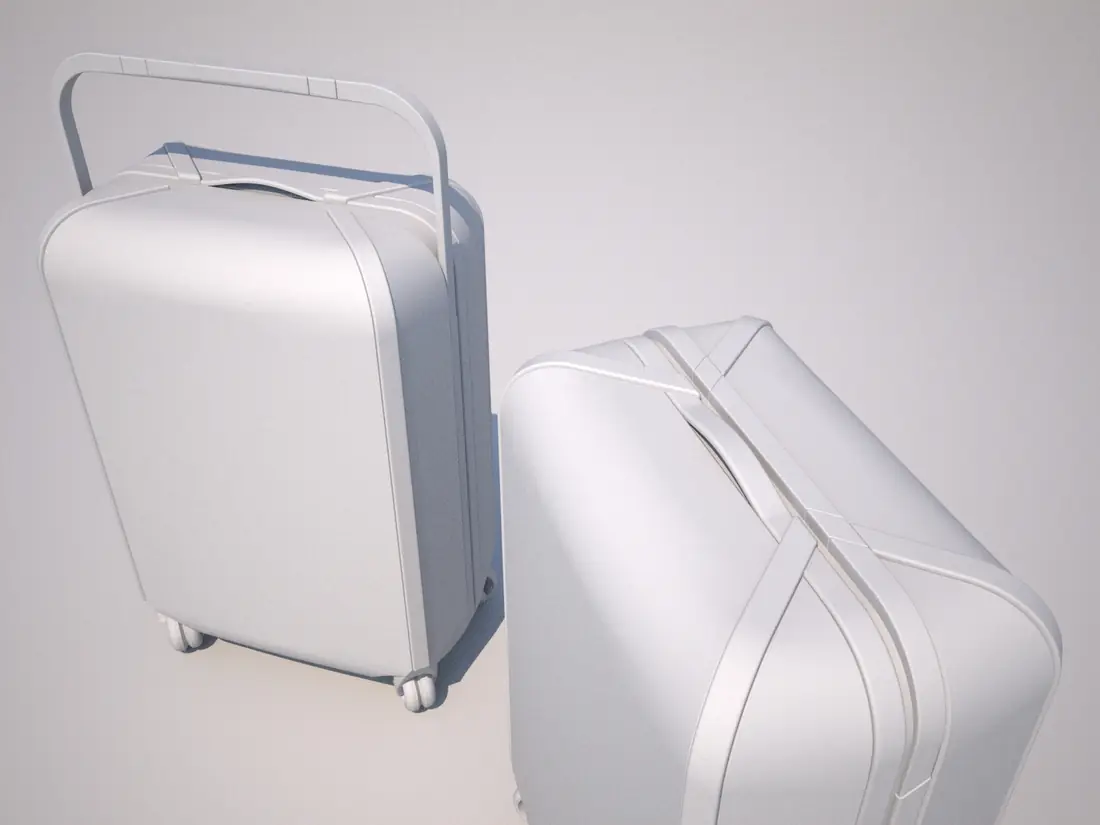
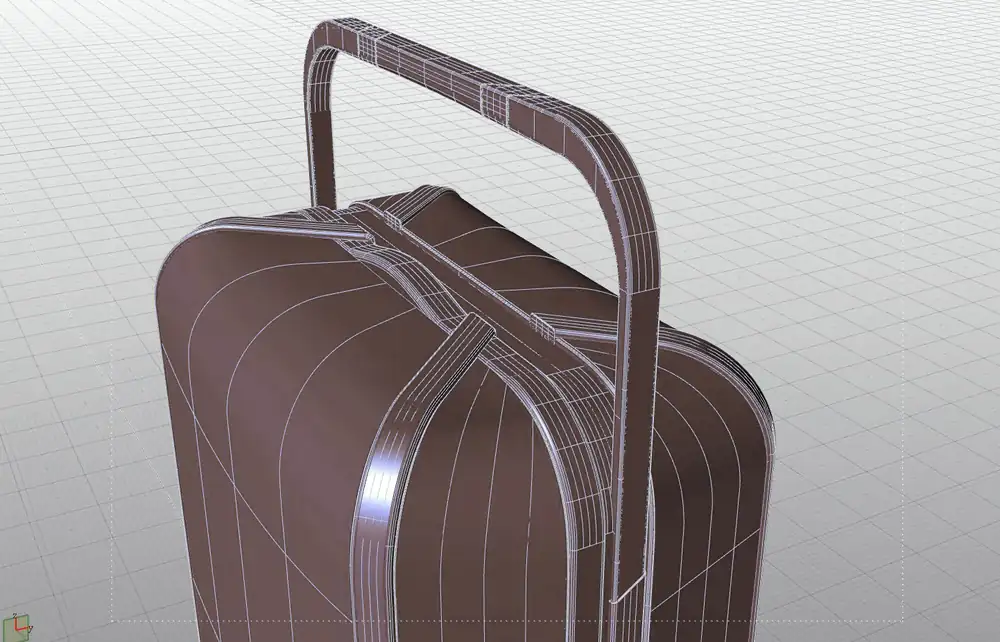
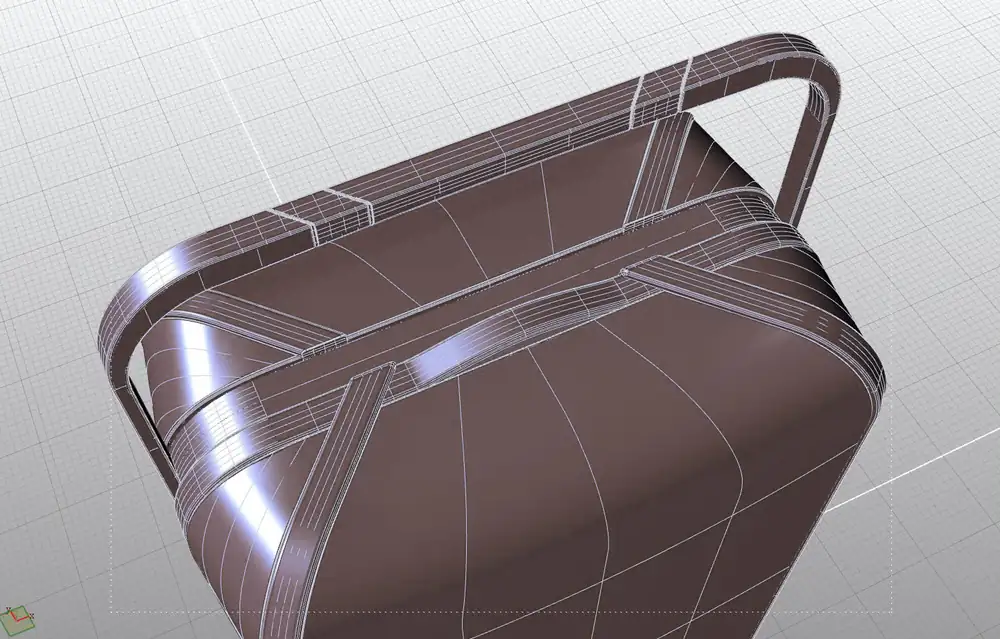
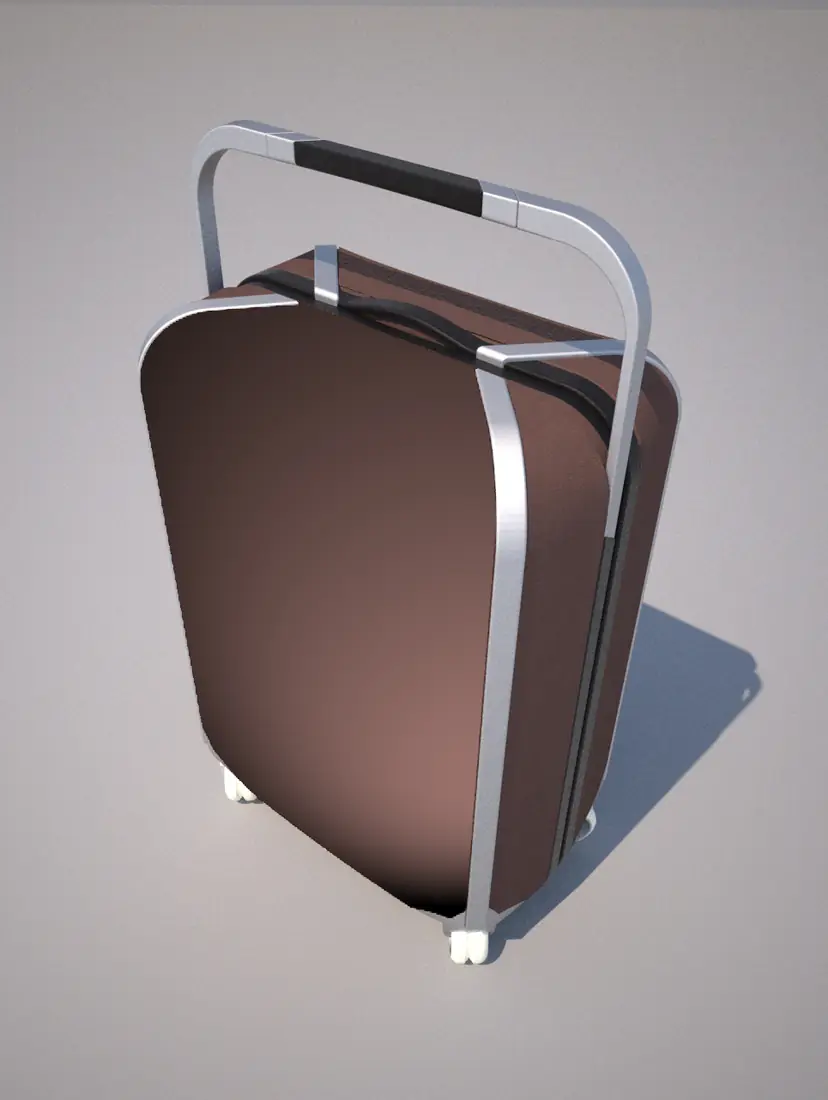
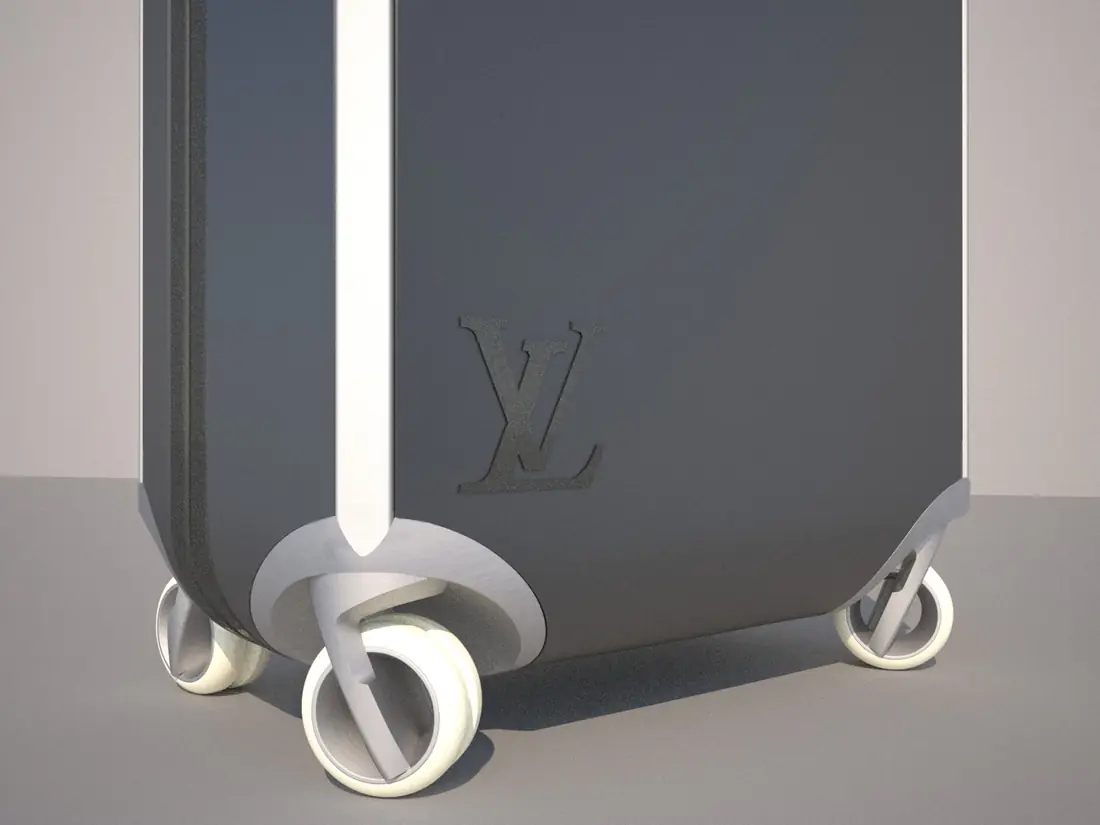
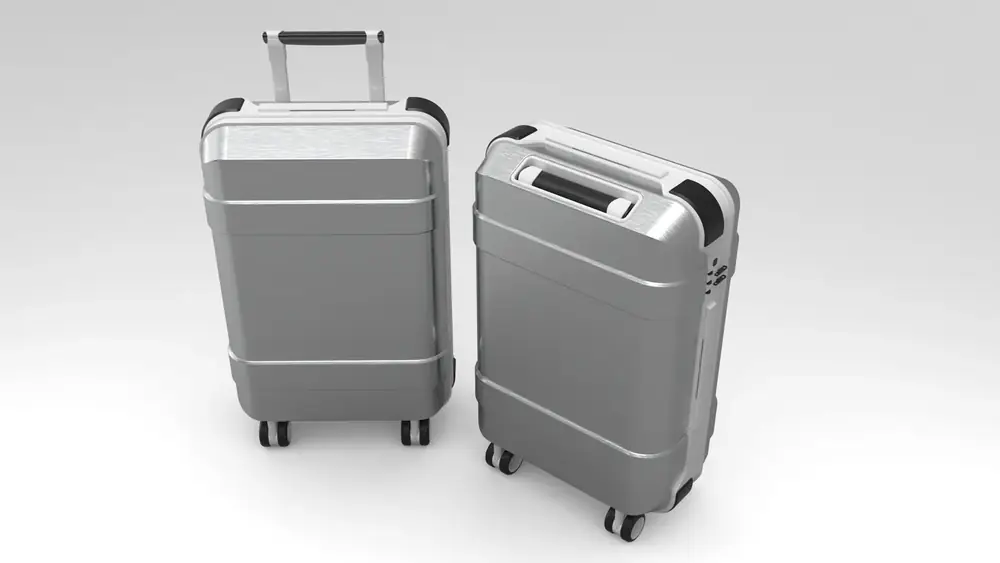
An exploratory study on travel. Continuous frames, integrated wheels and a new structural relationship between shell, handle and pull system.
1989–1992 · 4 images · Open the sequenceMandarina Duck
The product before the surface. What the object has to do, what it can be made of, and how the same architecture can cross different materials.
A significant part of this work was developed under NDA. The images published come from authorised material or from non-confidential studio documentation. Tooling data, supplier terms and confidential programmes are not shown.
Fregoli — Malle-coiffeuse and women’s leather goods
A trunk that becomes a dressing table. A flower that becomes construction.
Two projects that look far apart: furniture luggage, where the archetype comes from the opening mechanism, and women’s leather goods, where it comes from observing a natural form.
Different in their starting point, identical in method: first we define what the object must be, then we decide how it should look.
Malle-coiffeuse
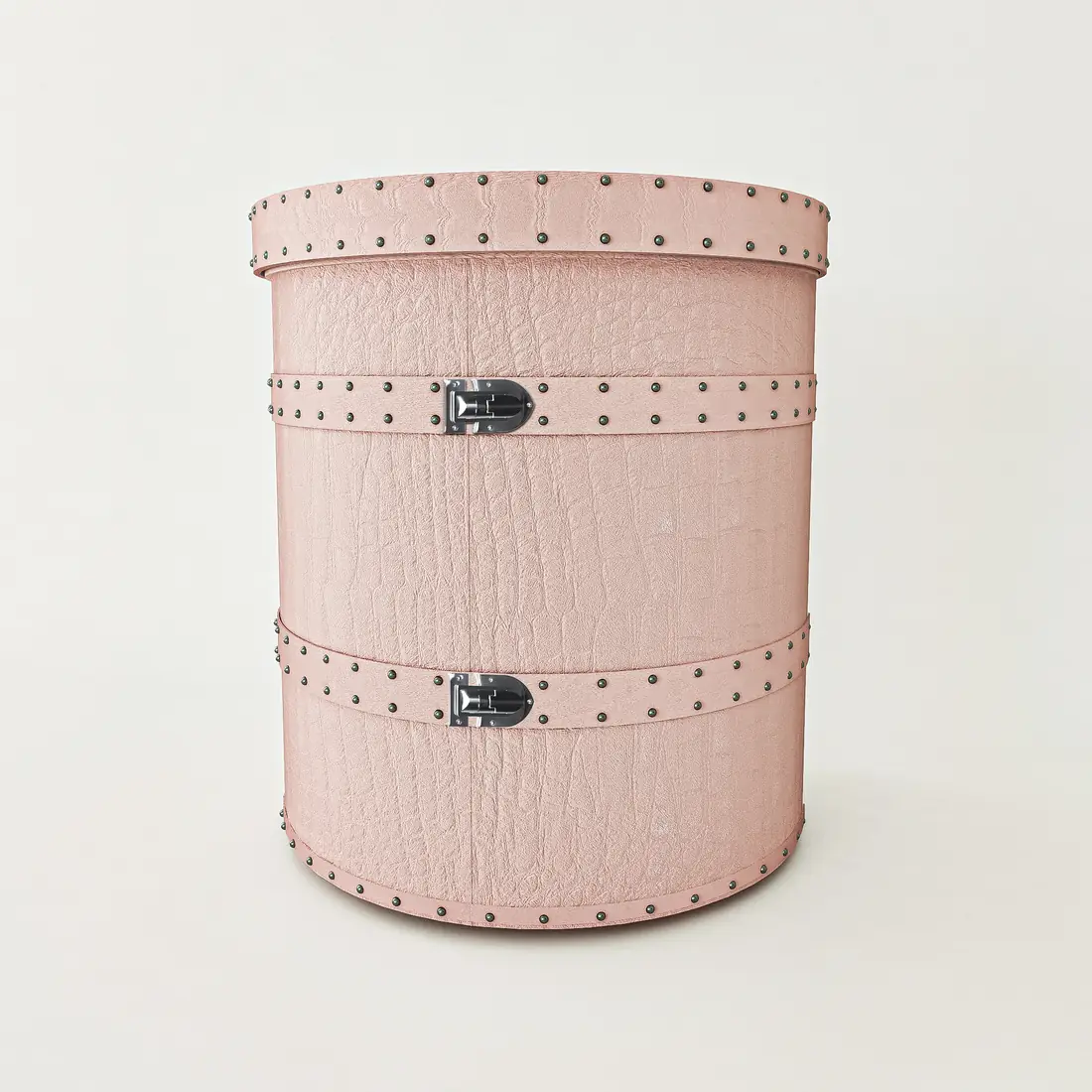
The silhouette of the malle chapelière. The function of the coiffeuse.
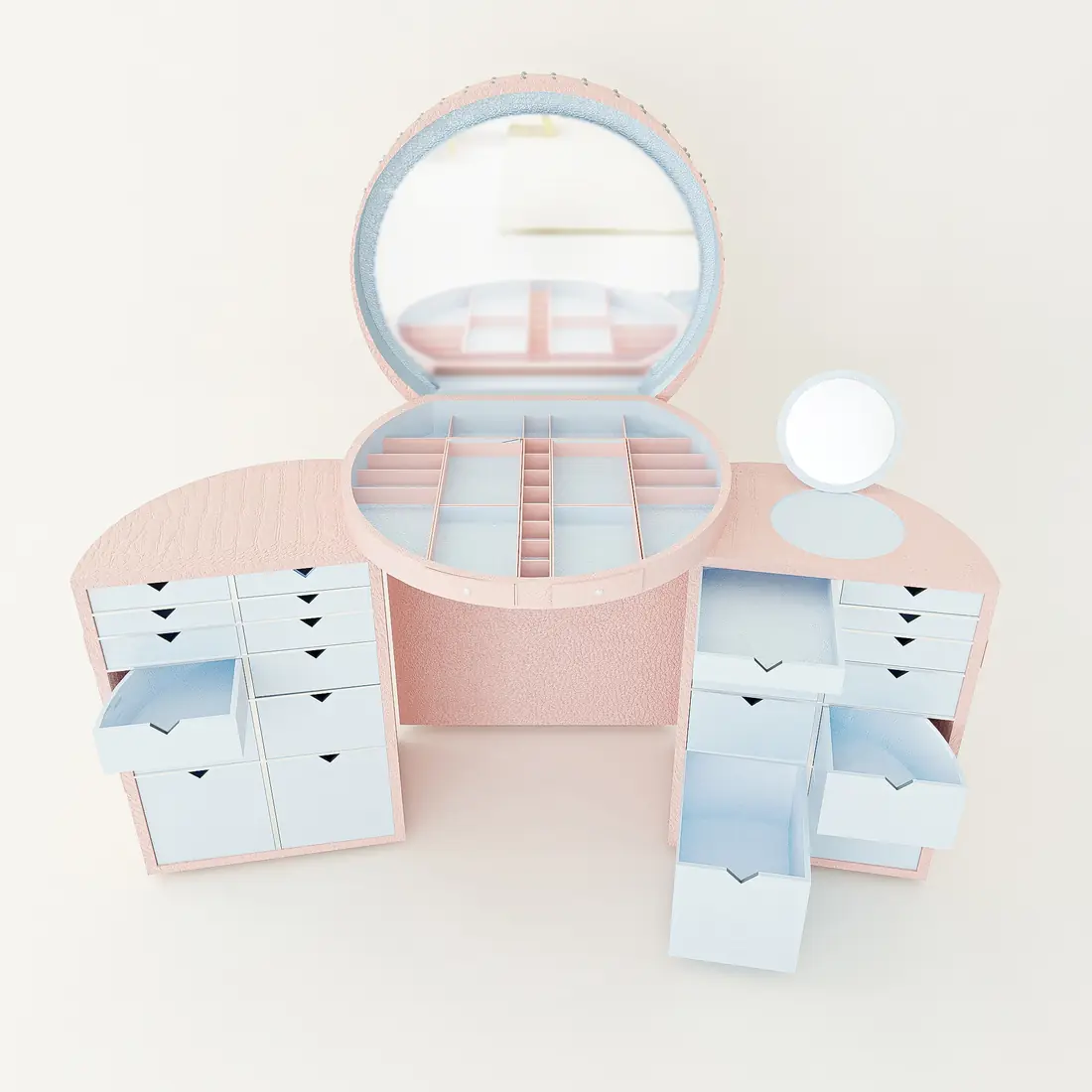
The trunk does not merely contain: as it opens it becomes furniture.
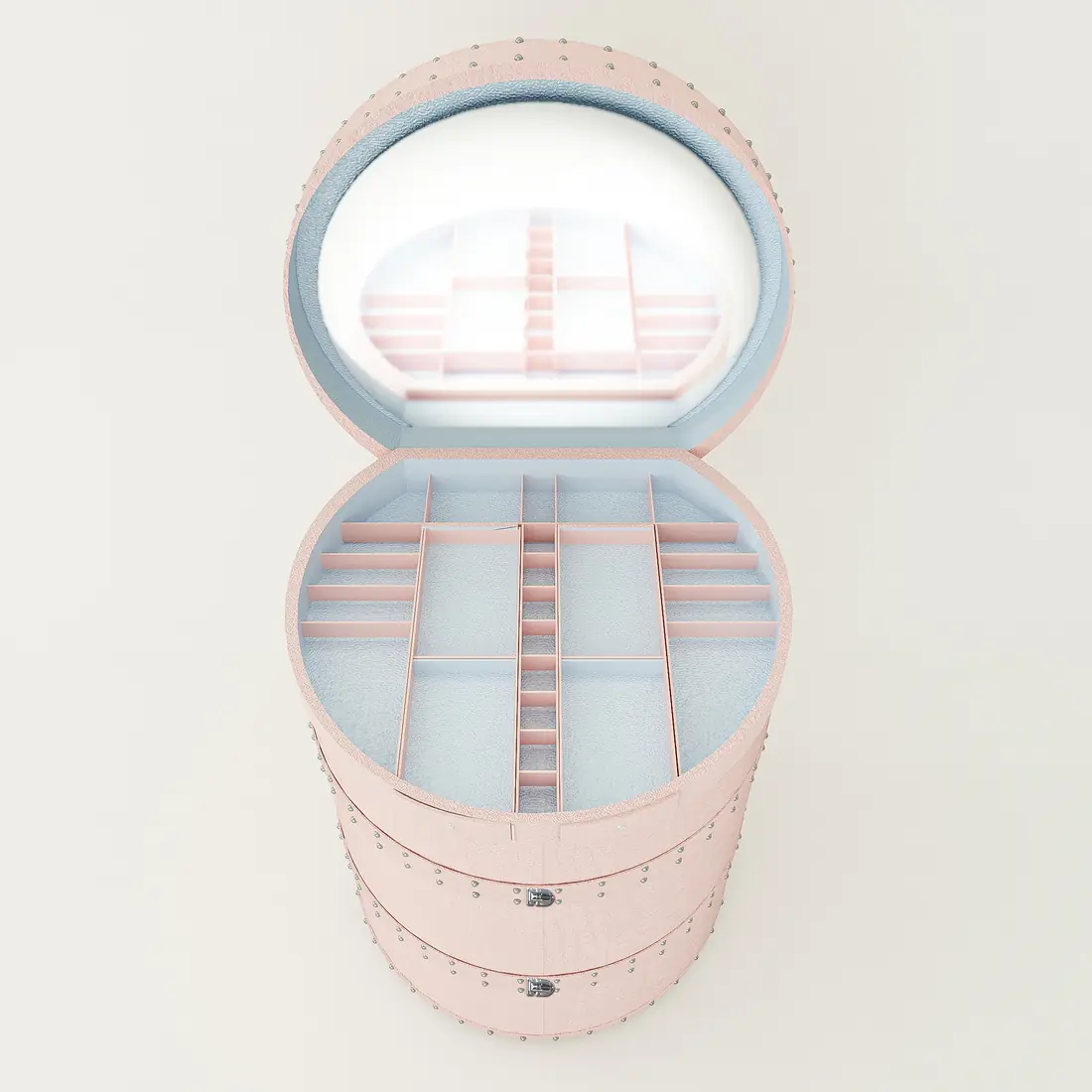
The circular lid swings back and holds the mirror. The tray beneath organises jewellery and accessories. The cylindrical body splits into two shells, revealing two banks of drawers and freeing the space to sit in the middle.
In a few movements, a closed travel volume becomes a complete coiffeuse.
Everything comes from a single hinge pitch. The two equatorial bands are not decoration: they carry the latches, align the studs and resolve the joint between the shells. They stay identical as the diameter changes, allowing size variants without multiplying the tooling.
Pink printed croc, pale blue interiors and drawer fronts, studs and locks in burnished metal, wheels integrated into the side bodies.
Role: Design Manager and head of product development.
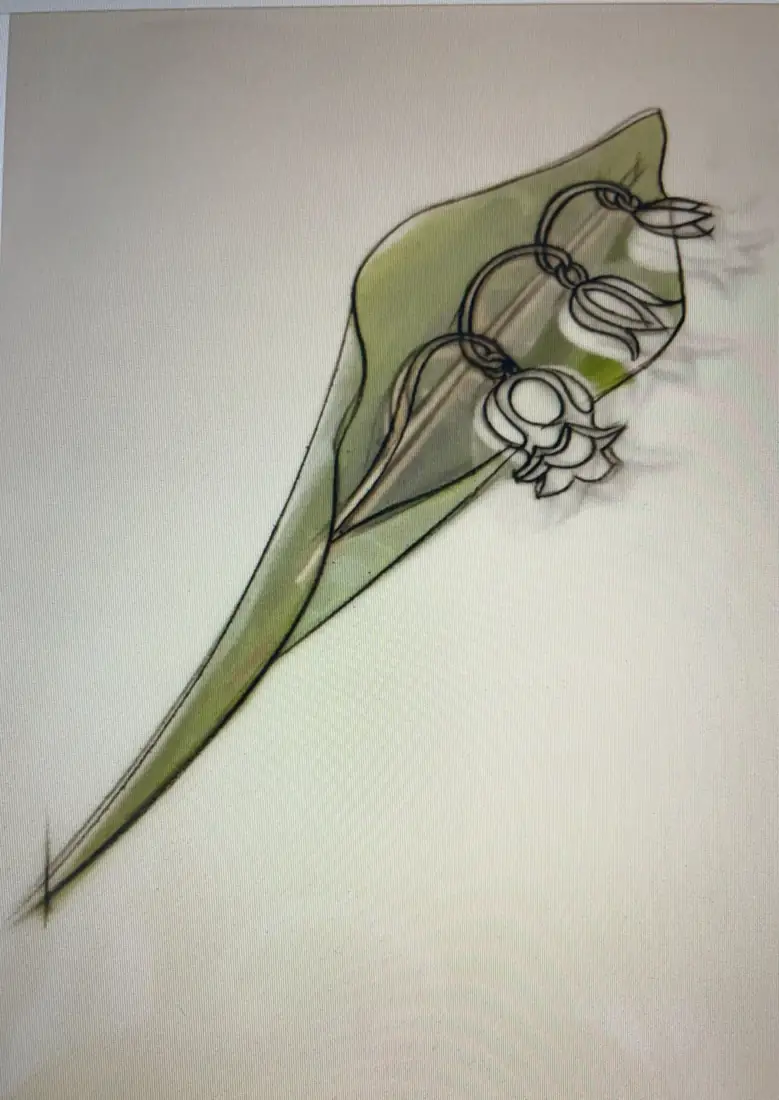
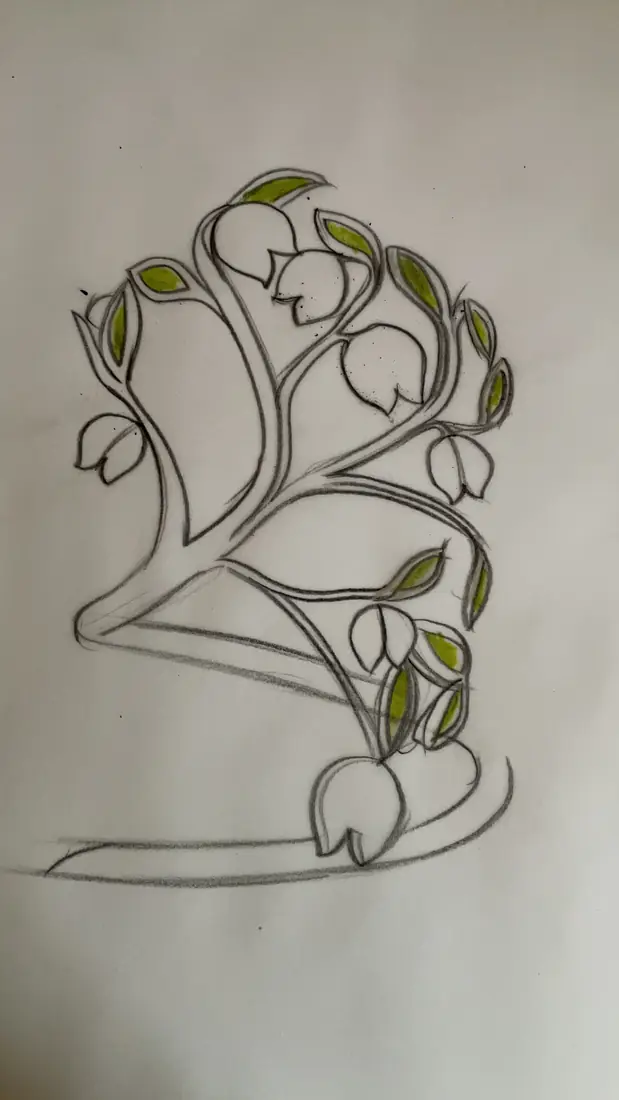
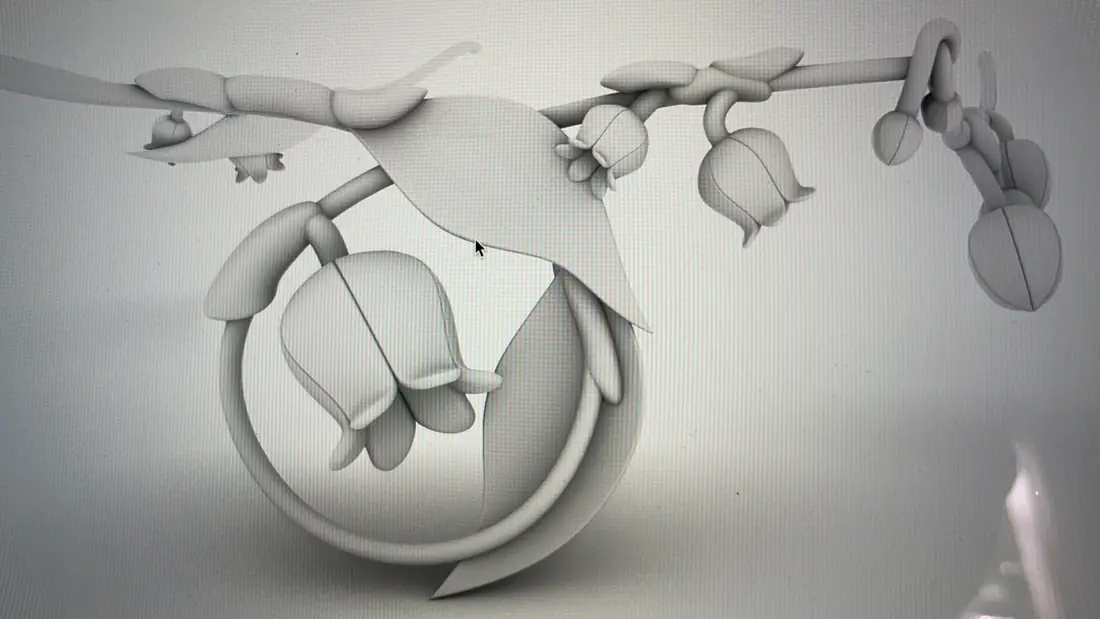
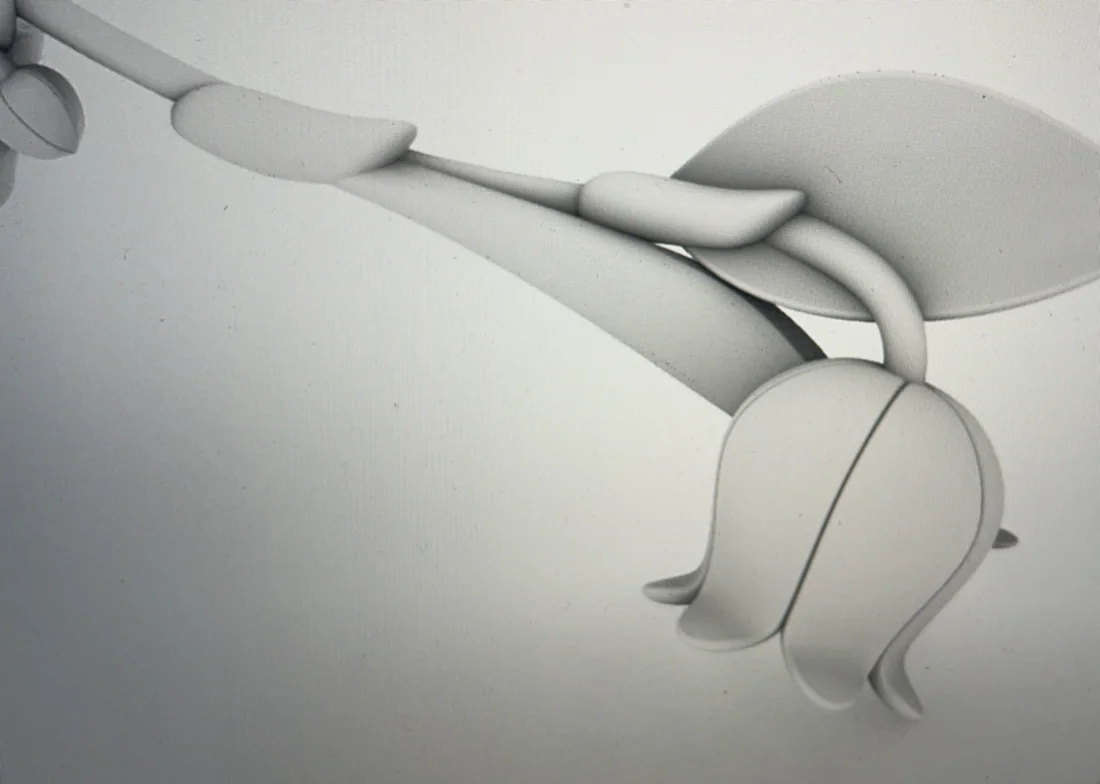
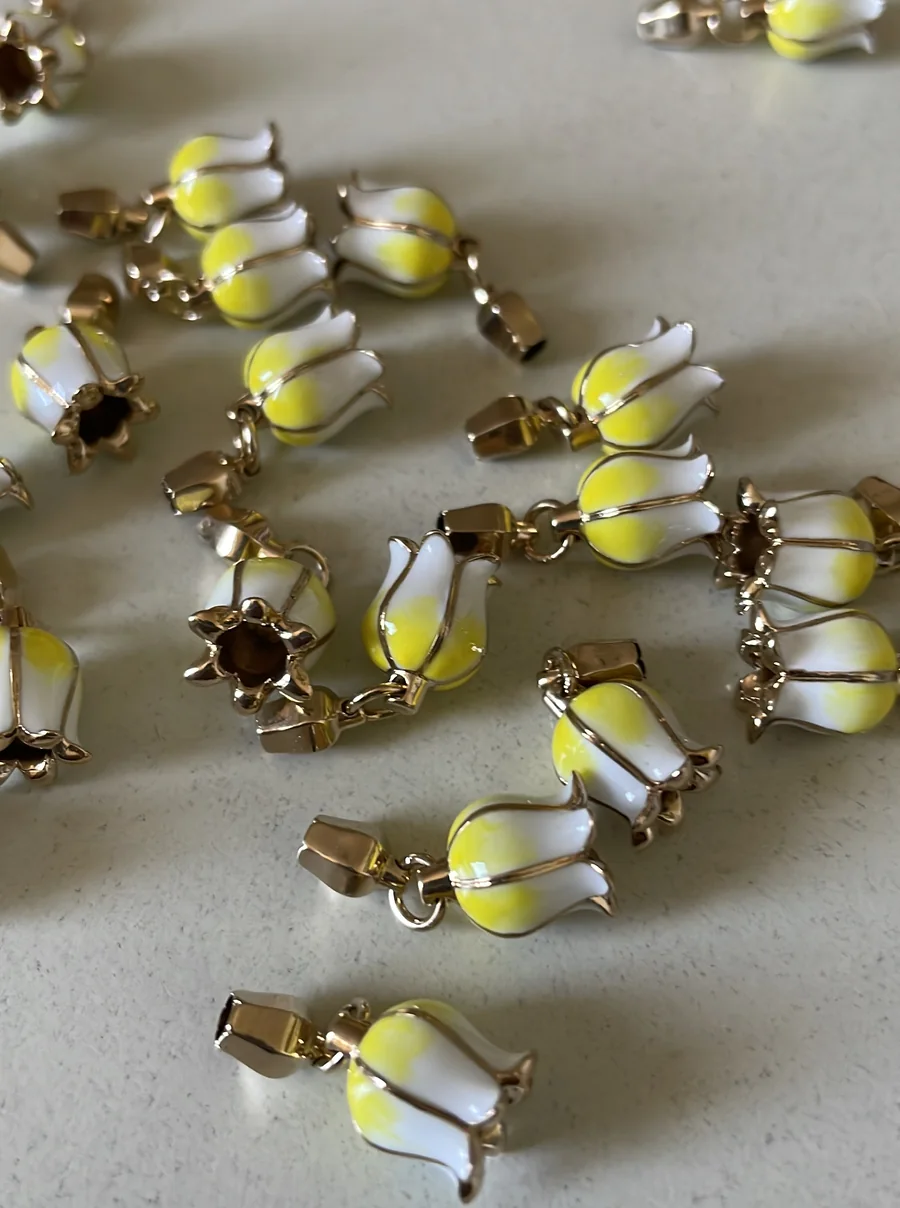
Women · Lily of the valley, from flower to hardware
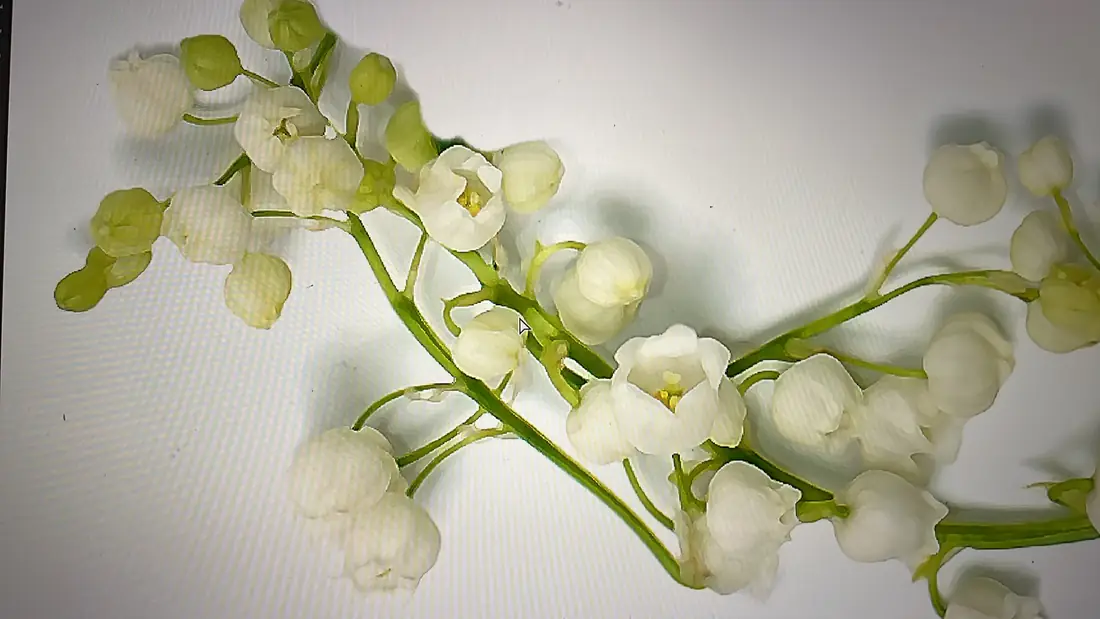
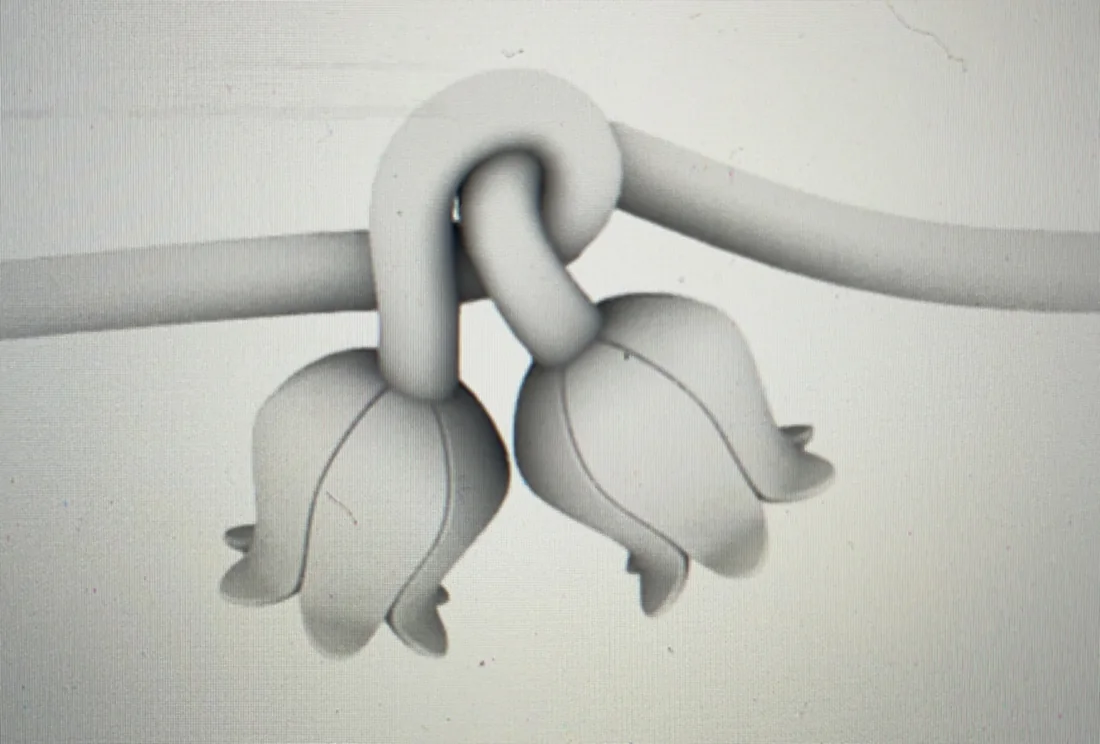
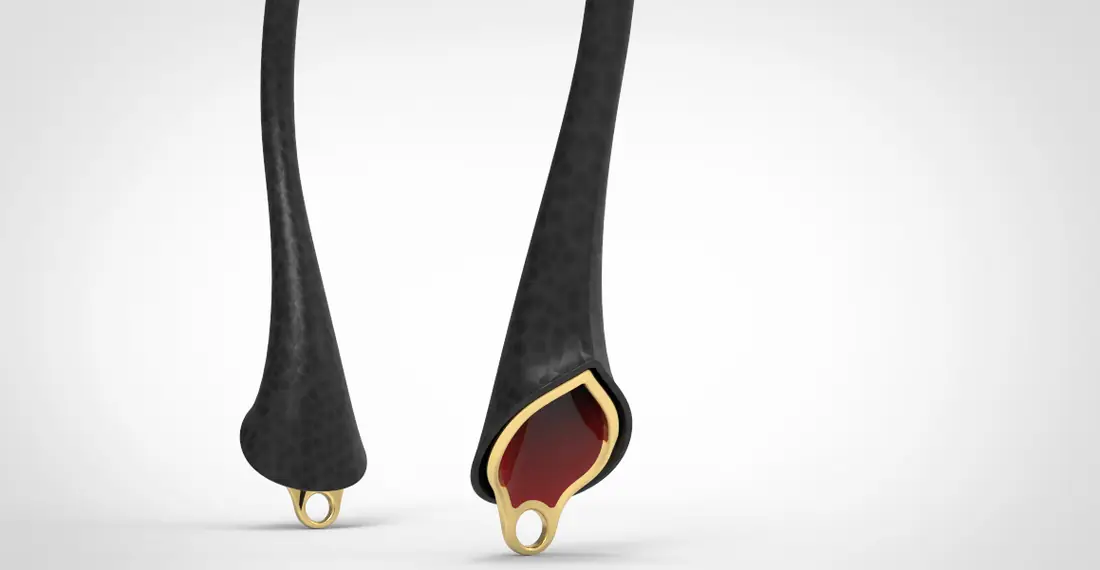
The lily of the valley enters the project as structure, not as decoration.
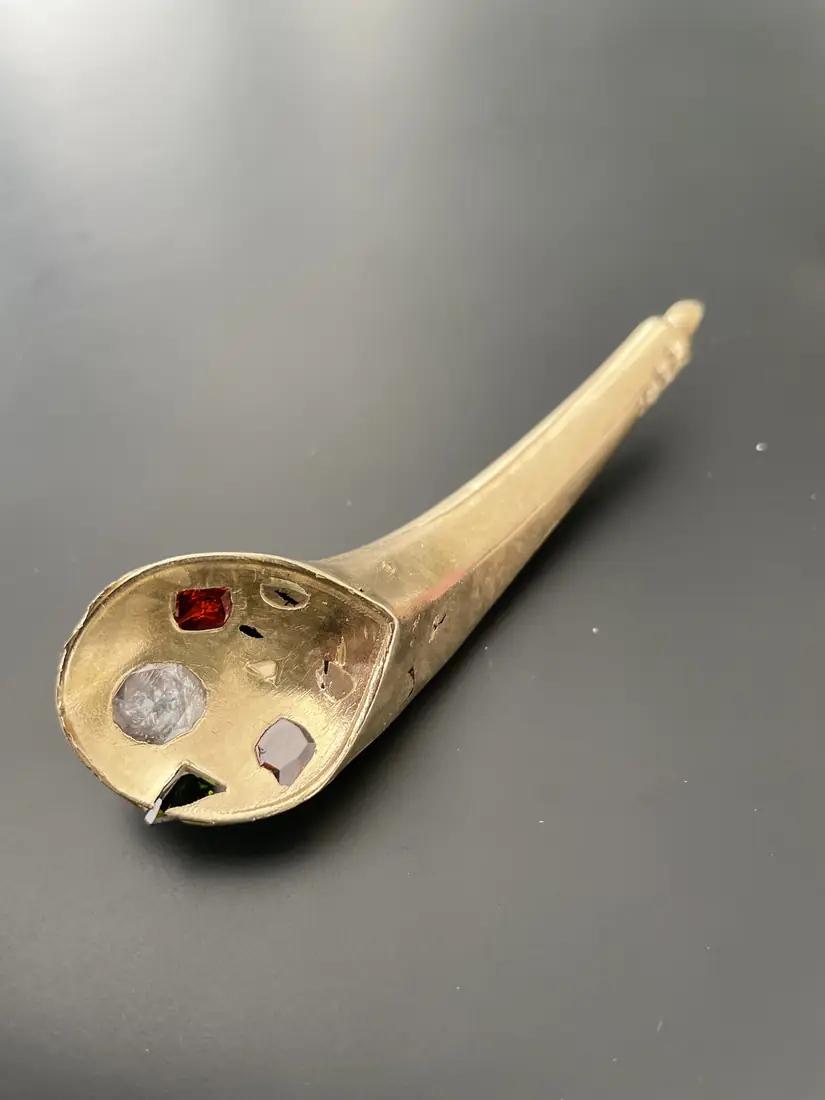
The stem becomes the handle and sets its section. The knot of the stalk becomes the anchor point. The closed bell becomes the end cap that holds the stone.
No element is applied to a shape already decided. The plant generates the form.
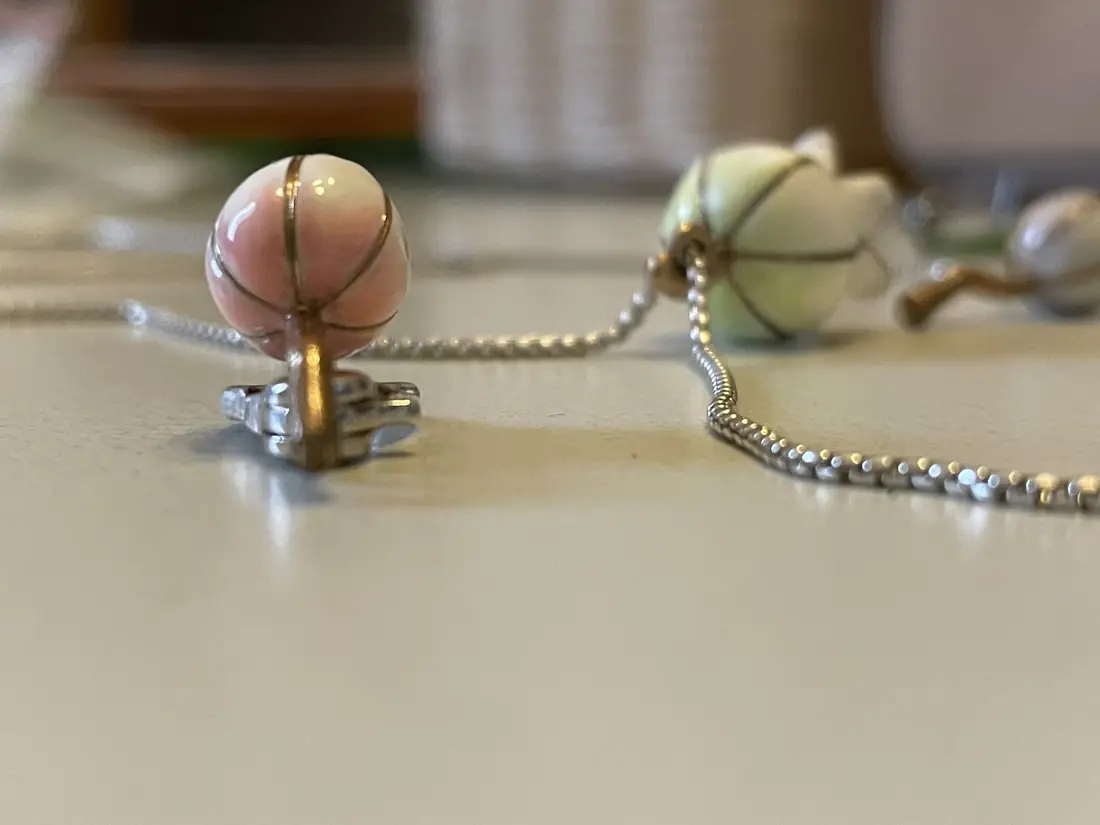
The path runs through photography, hand drawing, modelling, brass prototype, test stones and enamelled piece. Each step checks expression and manufacturability at once: minimum thicknesses, mould undercuts, strength and load.
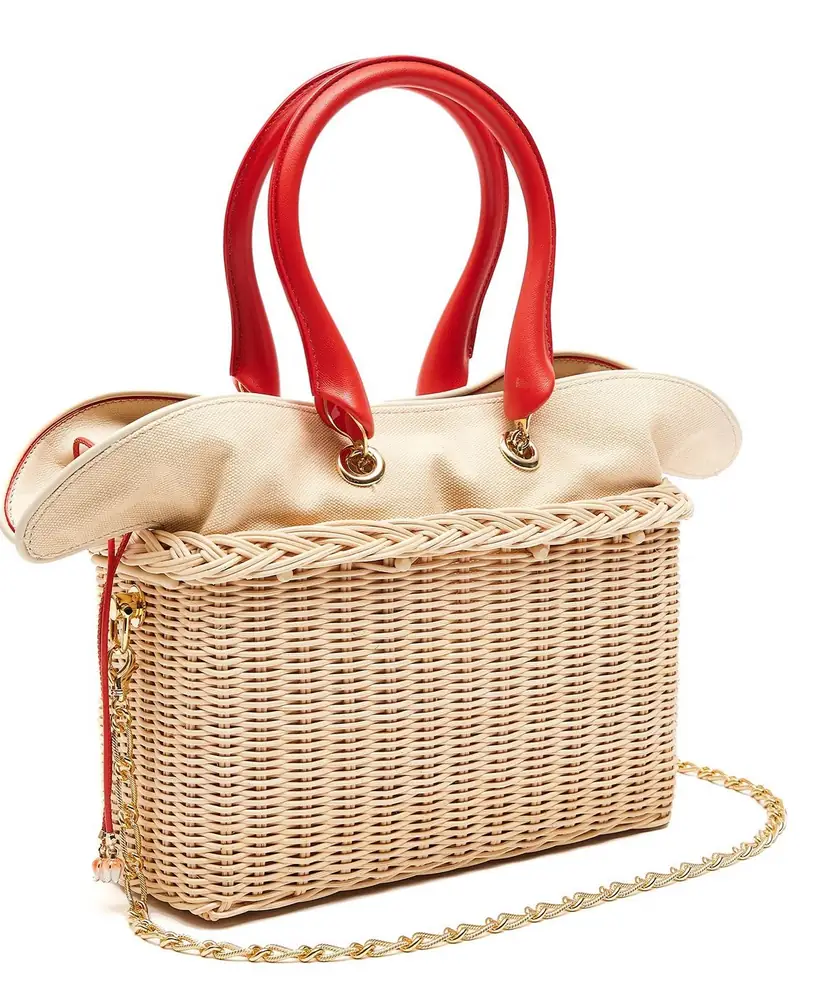
Women · Wicker basket bag
The same archetype changes scale and material.
Woven wicker builds the volume, canvas closes its mouth, leather makes the handles. The enamelled buds come back as the end pieces of the chain.
They are not a detail added to the collection: they are the same grammar carried from one object to another.
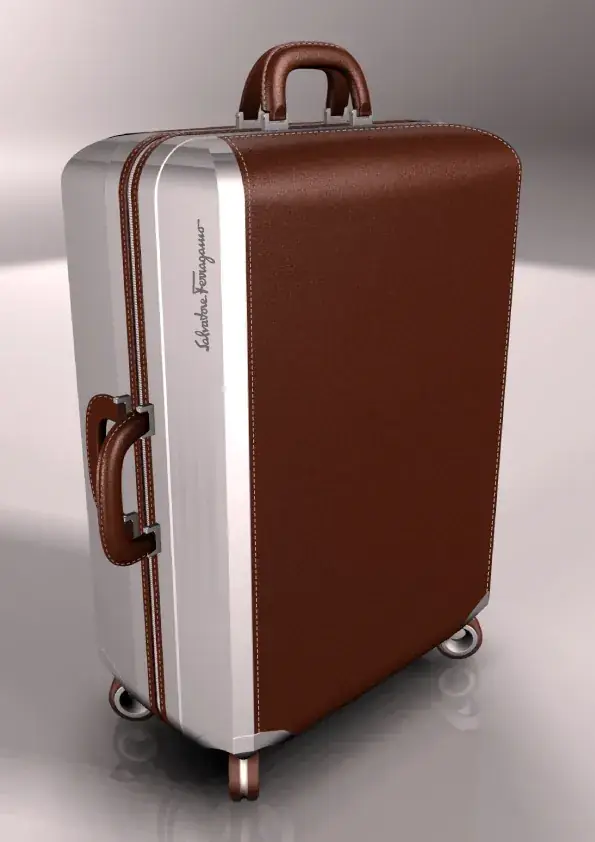
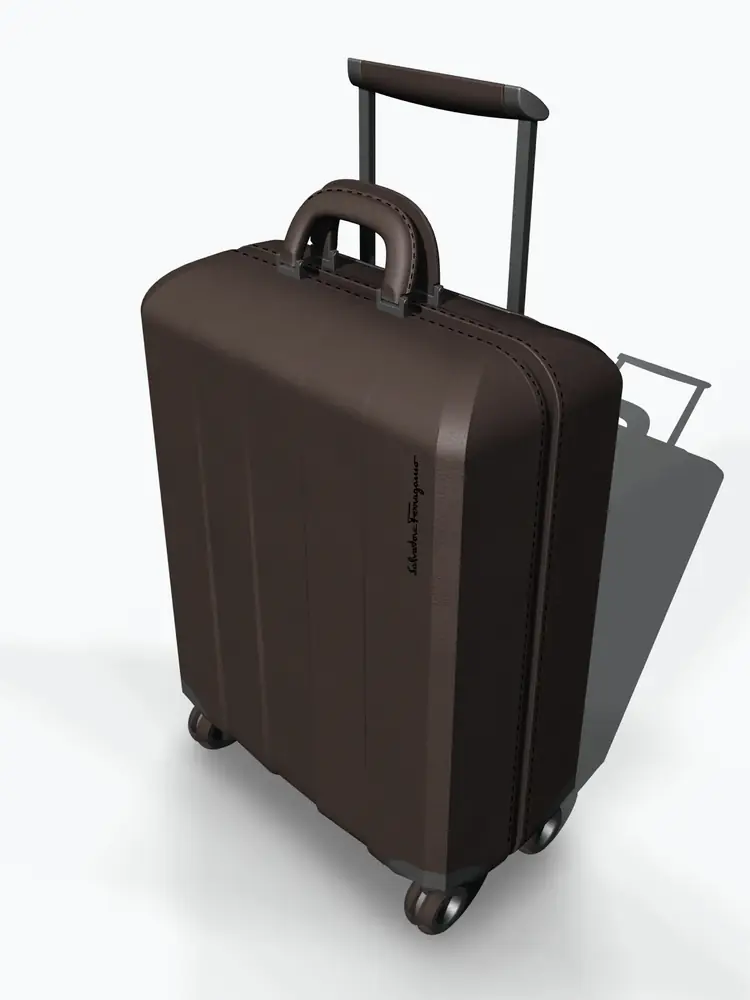
Ferragamo — Travel system and bag collection
An architecture built around the gesture of travelling.
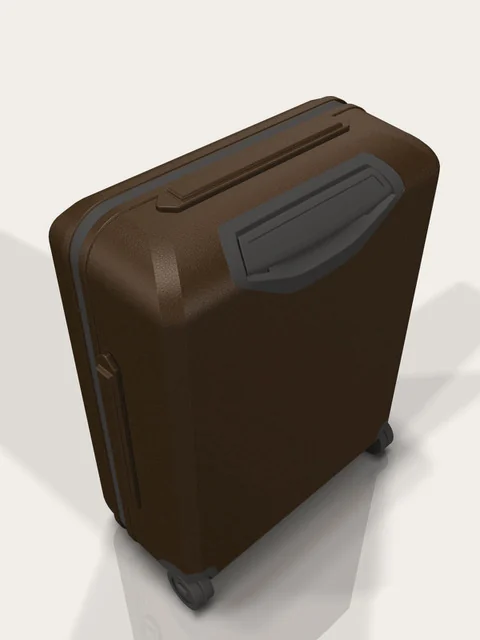
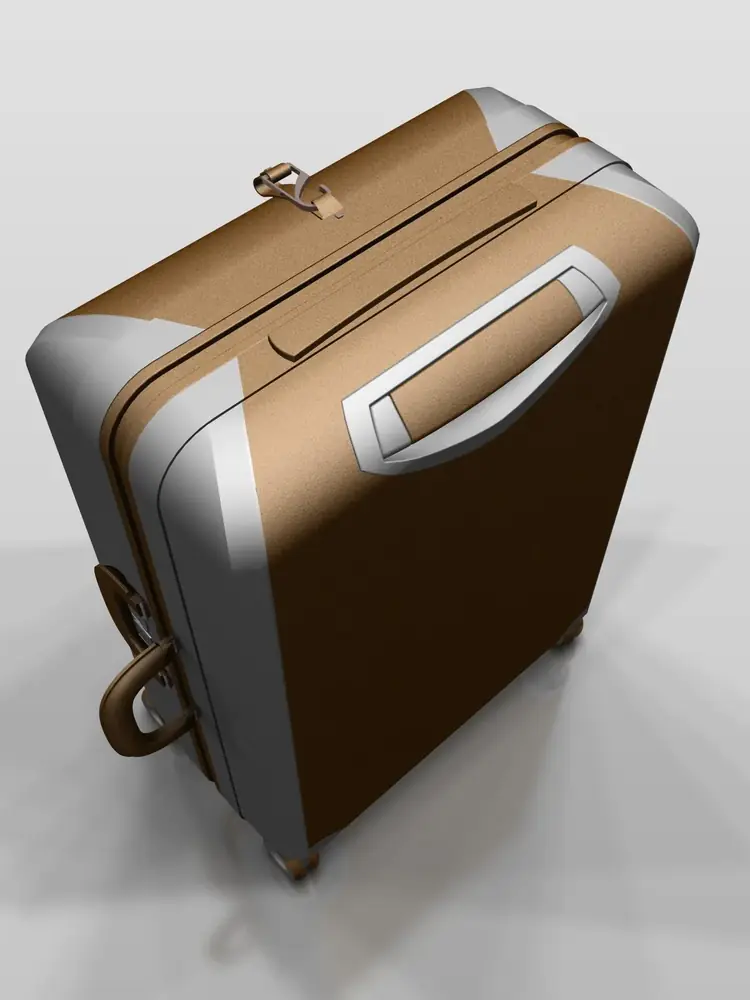
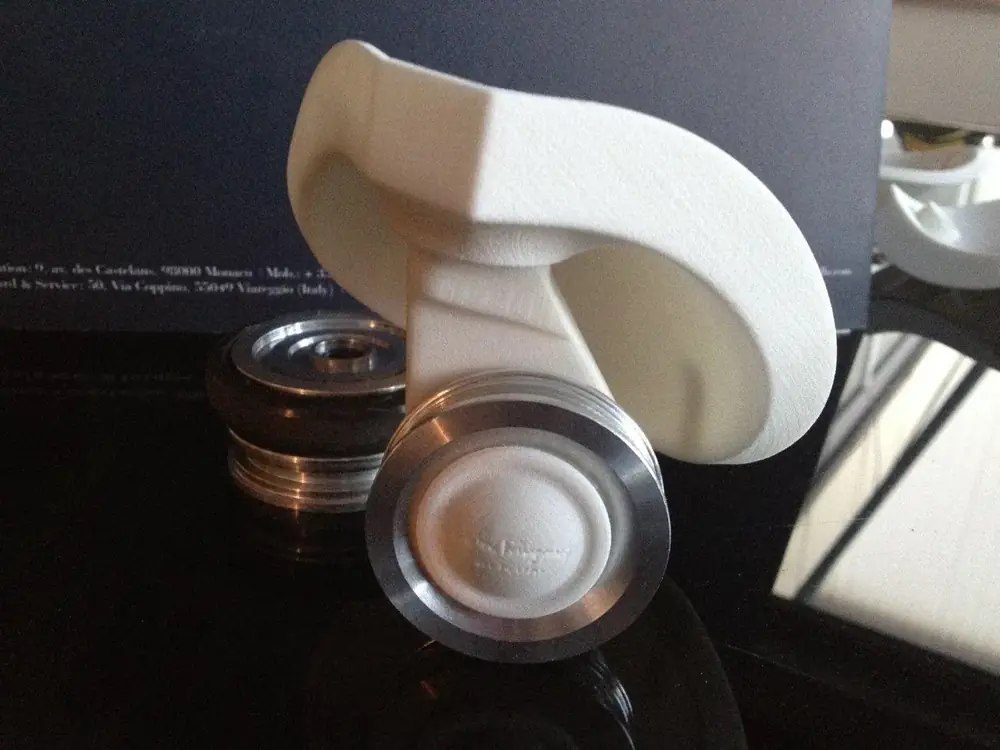
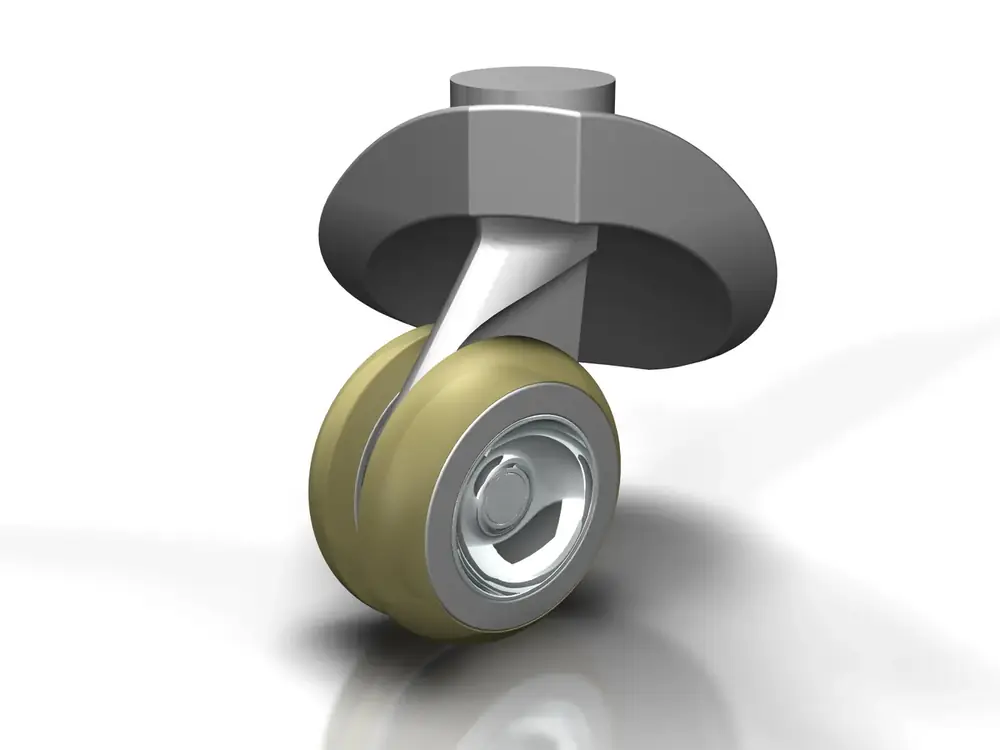
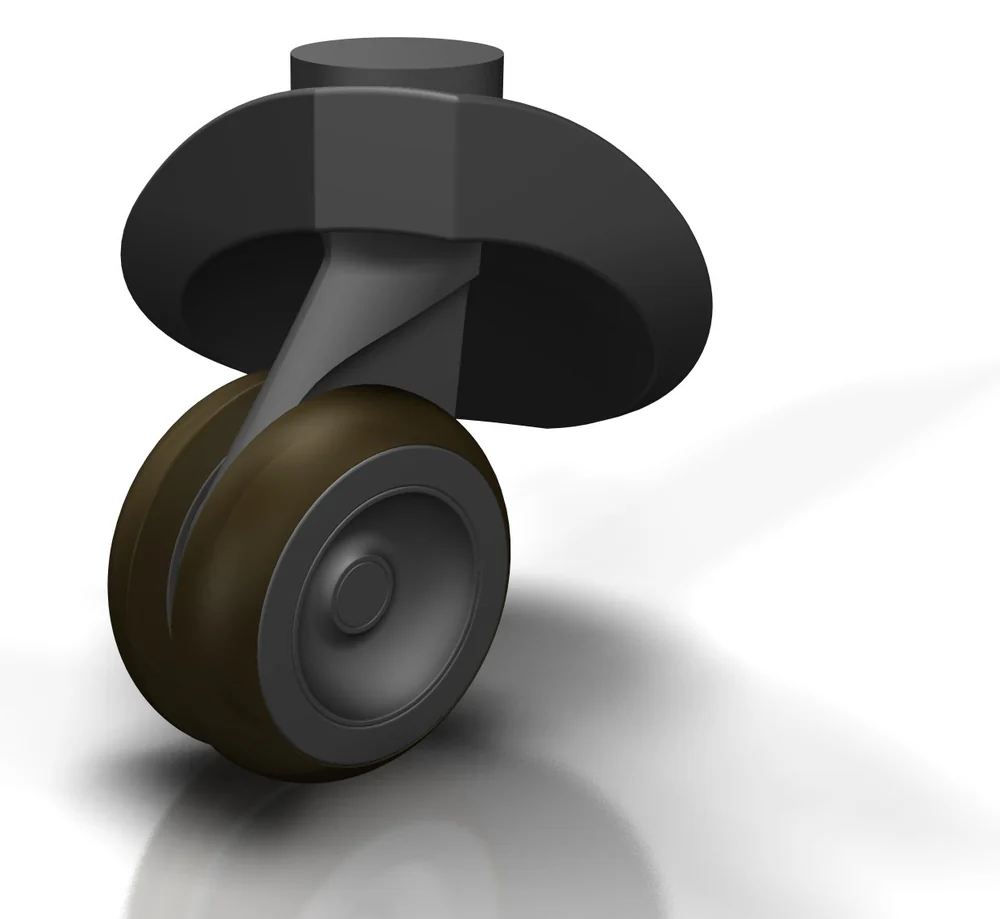
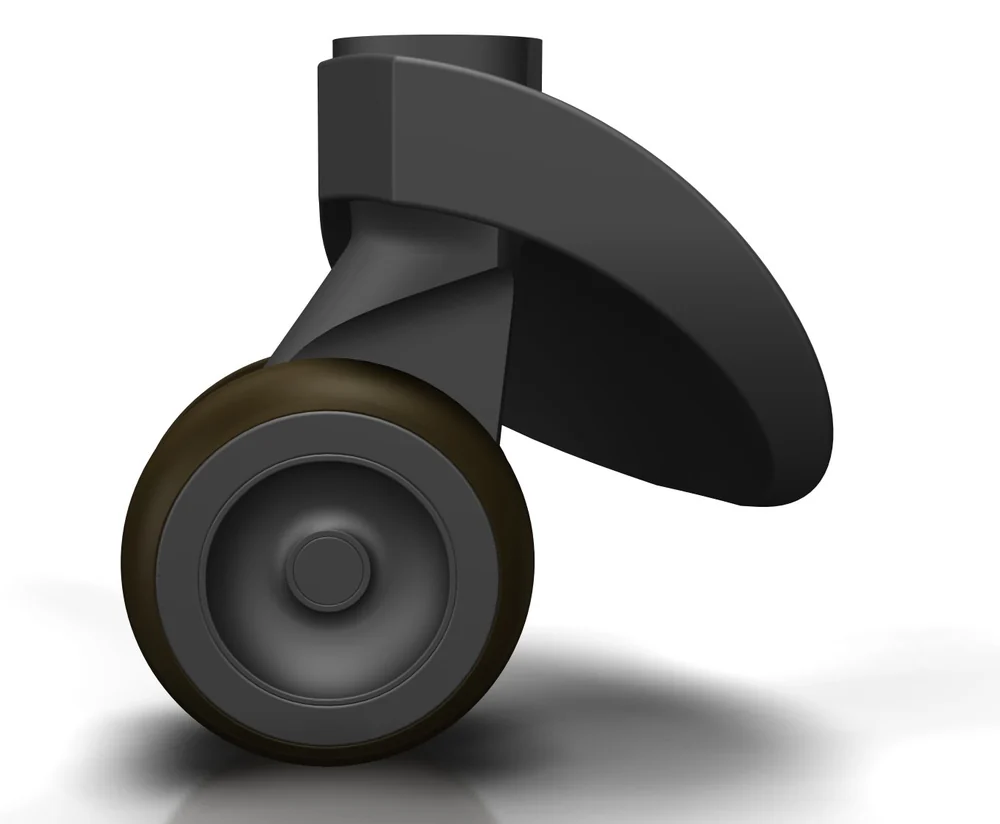
Leather, aluminium, pull system, handles and wheel housings are not components assembled at the end: they are dimensioned as parts of the same system.
The leather does not simply cover a shell already defined. Perimeter band, zip, corner reinforcements and handles take part in the construction.
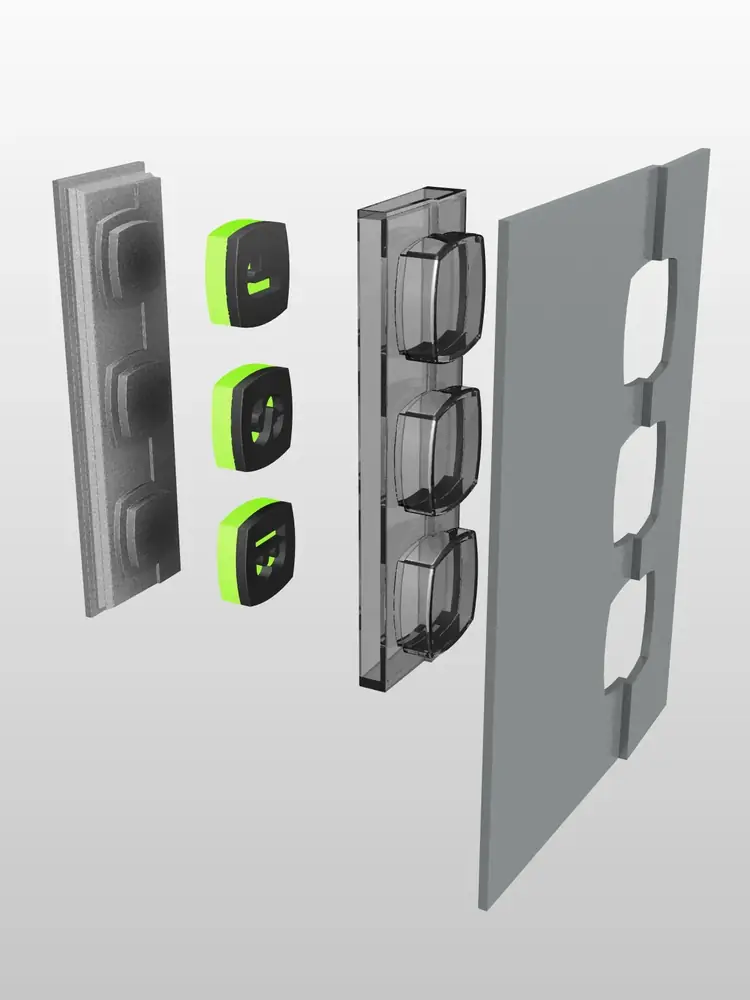
The sequence shows the finished product and then takes it apart — handle brackets, control unit, wheel, pull bridge — because the project is born exactly that way: from the relationship between the parts to the identity of the whole.
Role: Creative Accessories Designer.
Travel system
Bag collection · from drawing to product
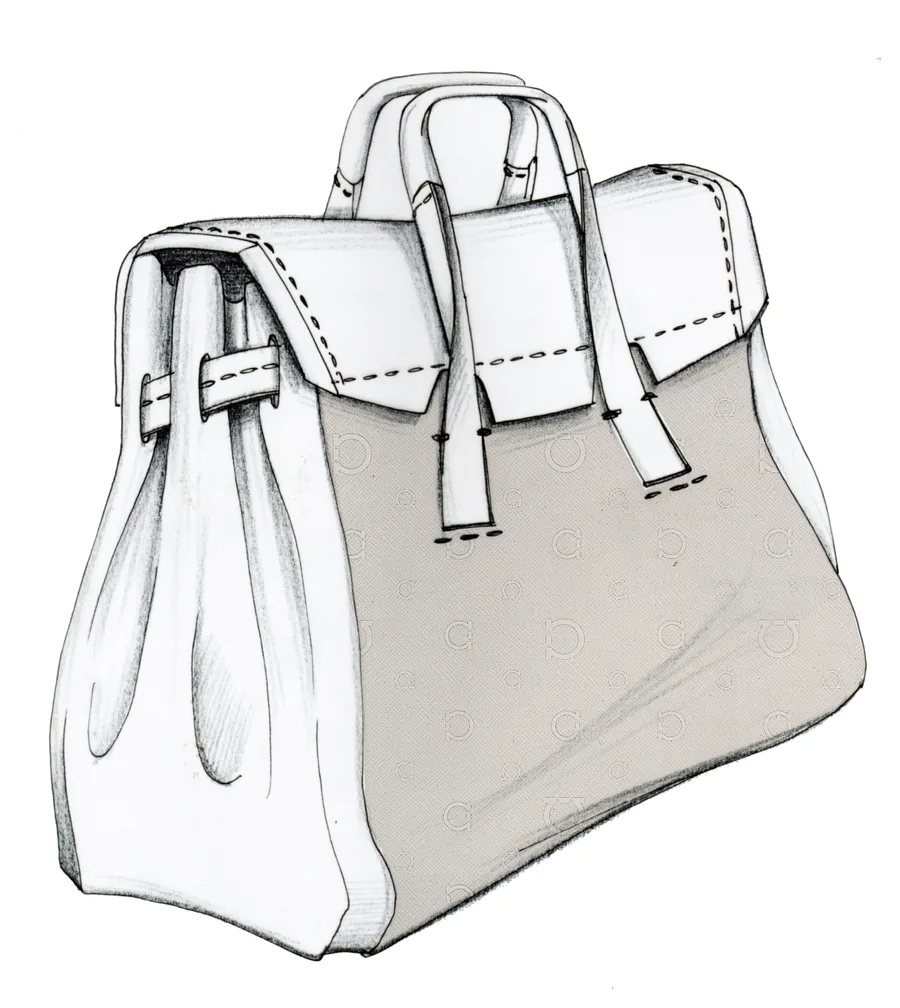
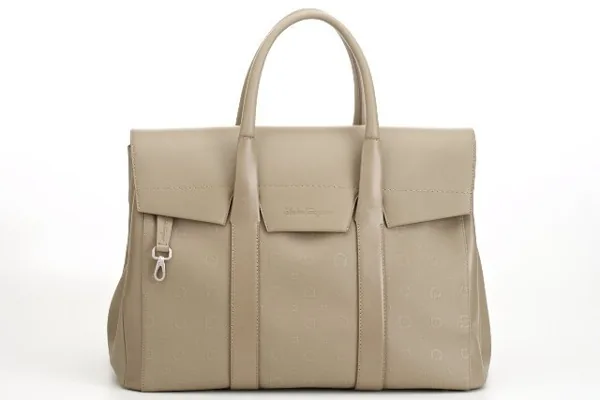
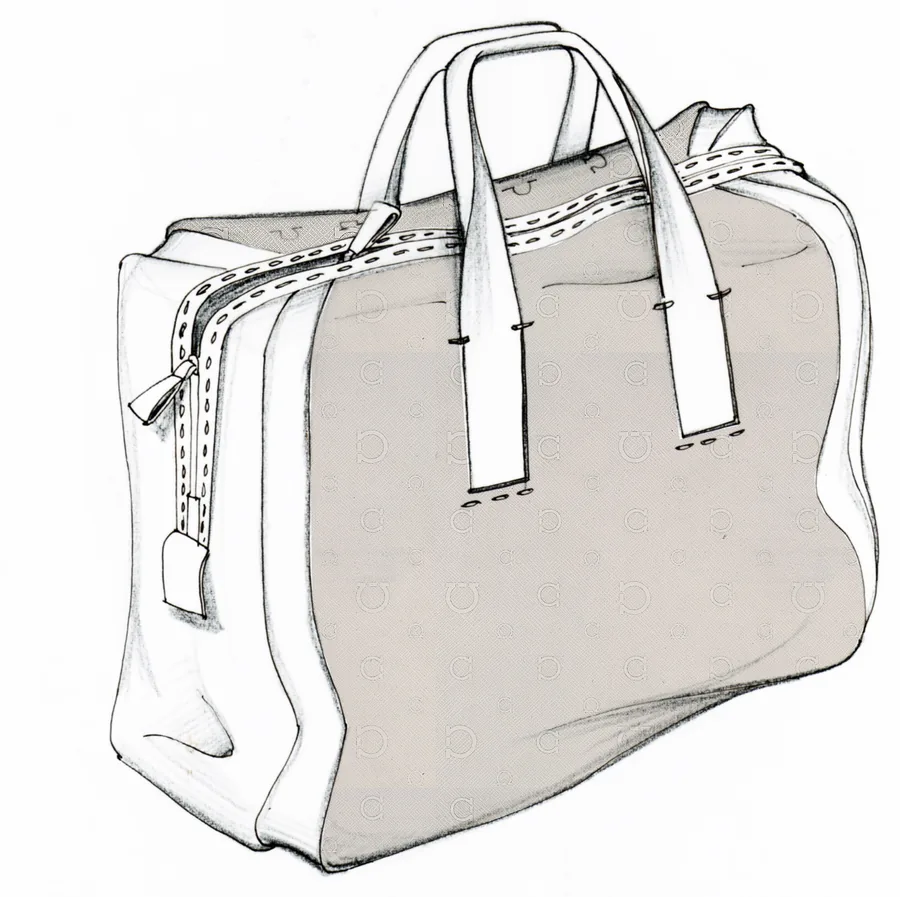
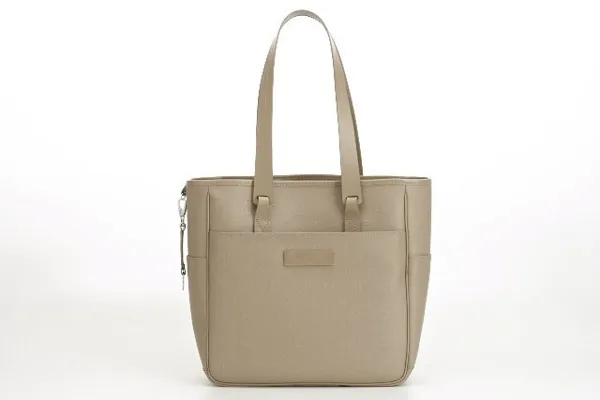
The same logic moves from luggage to bags.
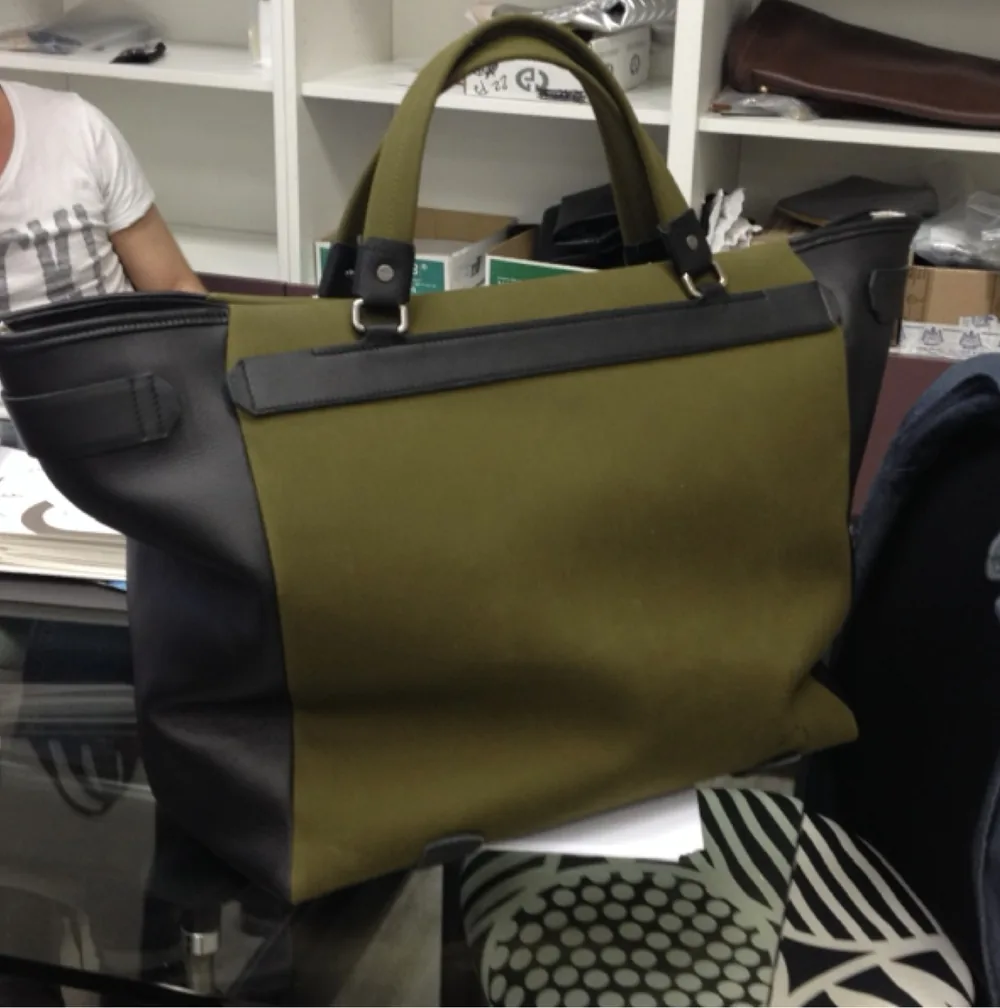
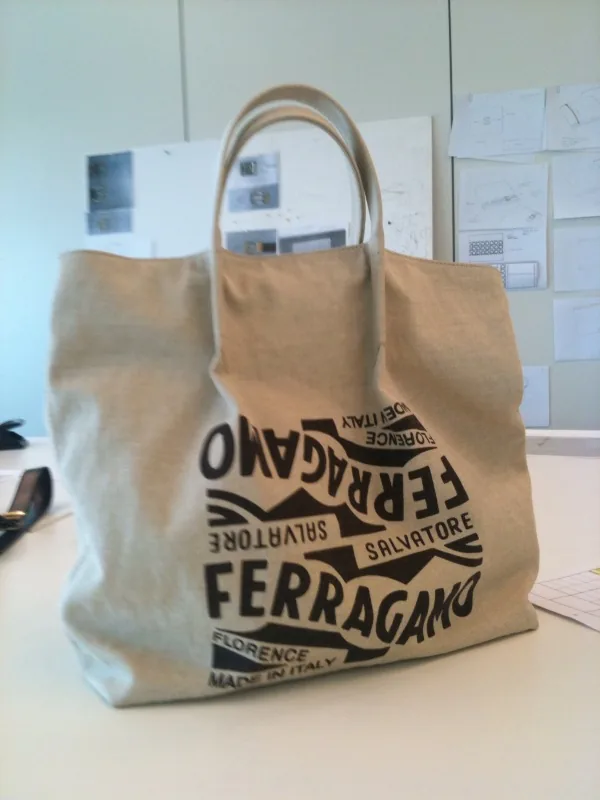
The drawing sets the character before the material: the trapezoidal body, the three flaps closing the top edge, the handles that run down the front and become part of the drawing instead of sitting on top of it.
From sheet to prototype the construction does not change. The material changes — canvas, smooth leather, embossed Gancini — and so does the size, but the architecture of the edge and the handle anchoring remain.
One family: shopper, weekend bag, briefcase. One grammar.
Loro Piana — Hard luggage and soft bags
Two opposite constructions. One family.
The project crosses two different territories: hard luggage covered in hand-grained leather and soft bags in deerskin.
One material holds the shape. The other lives off its own deformation.
What unites them is the hardware.
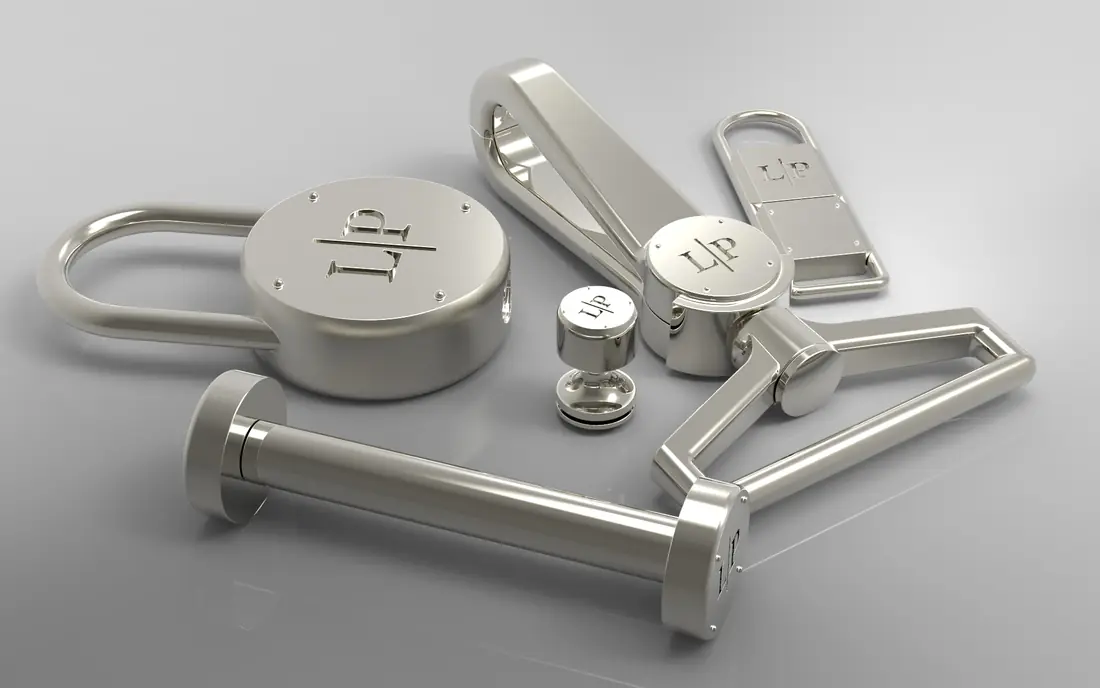
Padlock, swivel hooks, handle end caps and studs all come from the same riveted-plate logic and cross both categories, growing lighter as they move from hard to soft.
The kinship does not come from repeating the shape, but from the continuity of the code.
Role: Accessory Designer and product development.
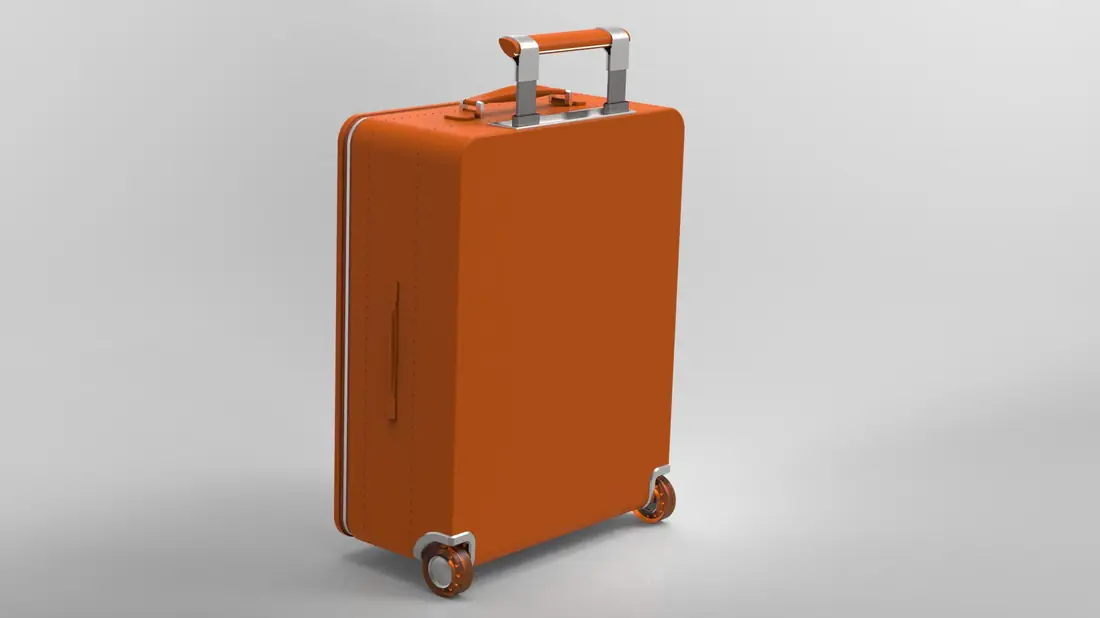
Hard luggage · Hand-grained leather
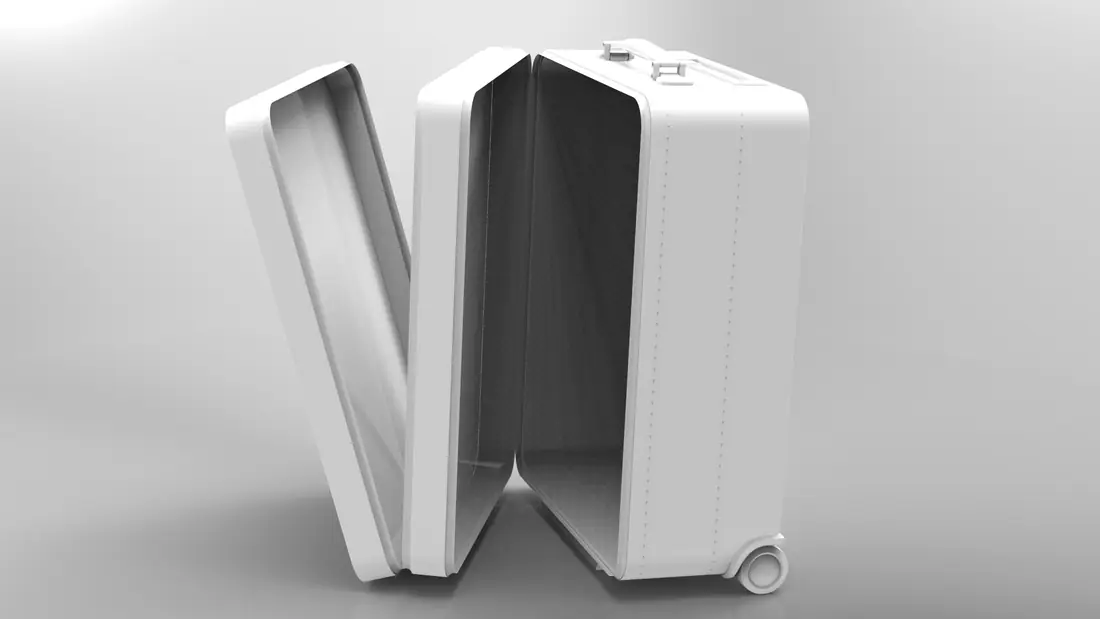
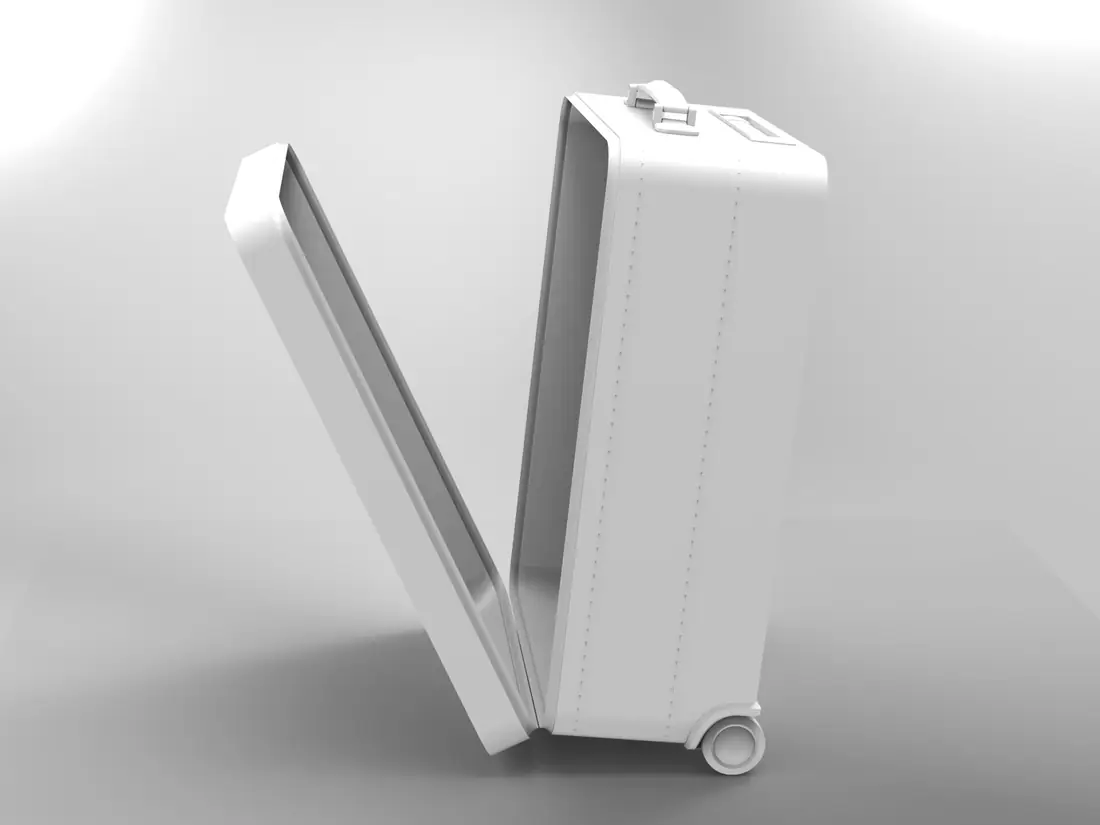
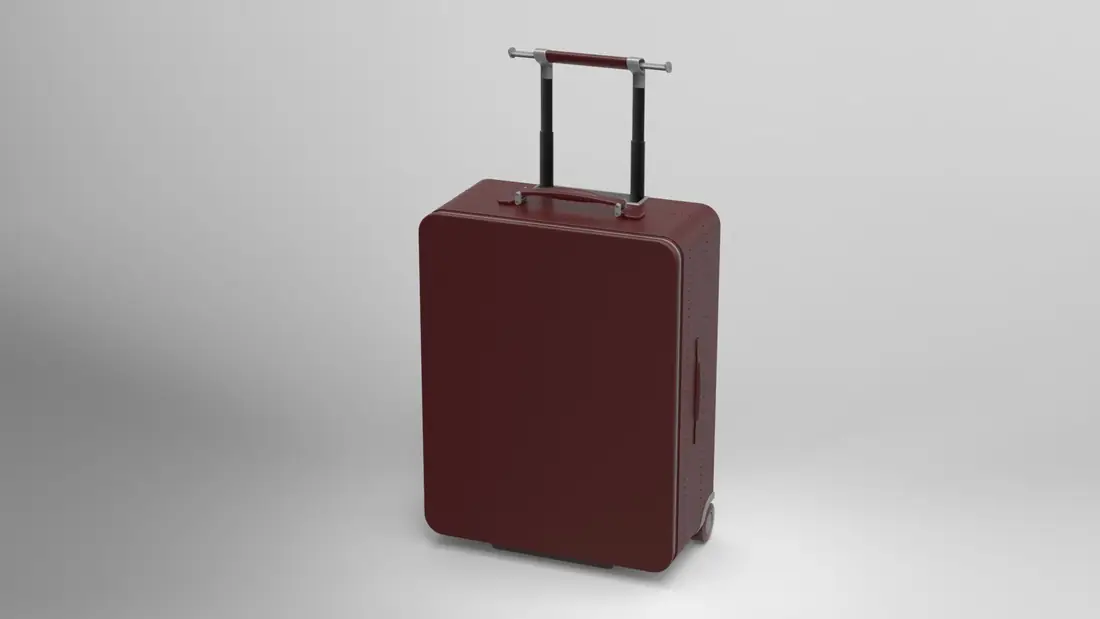
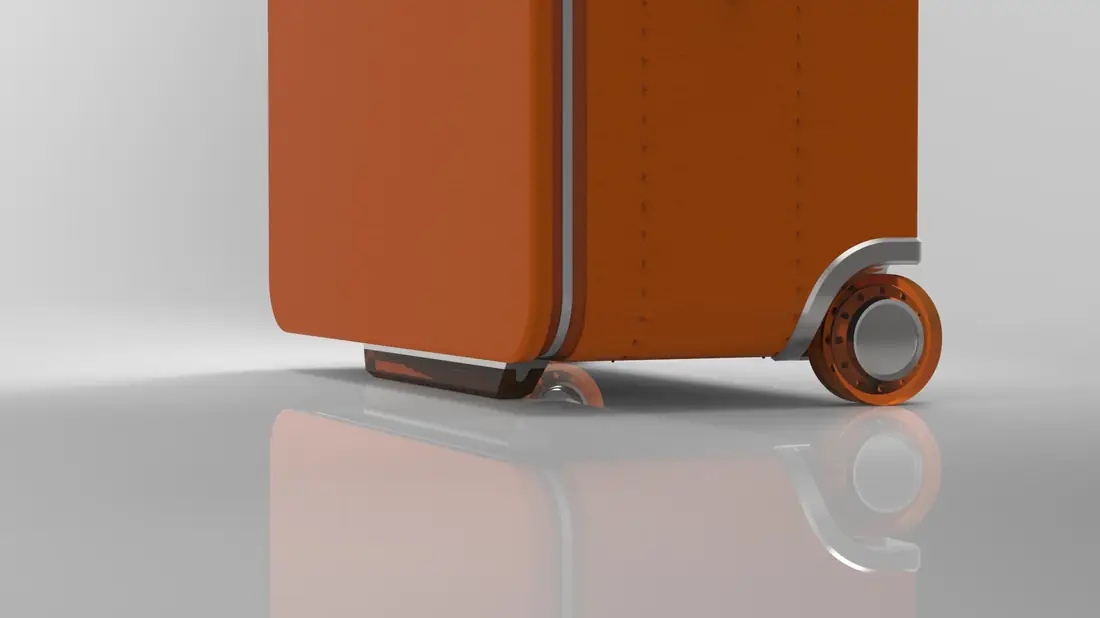
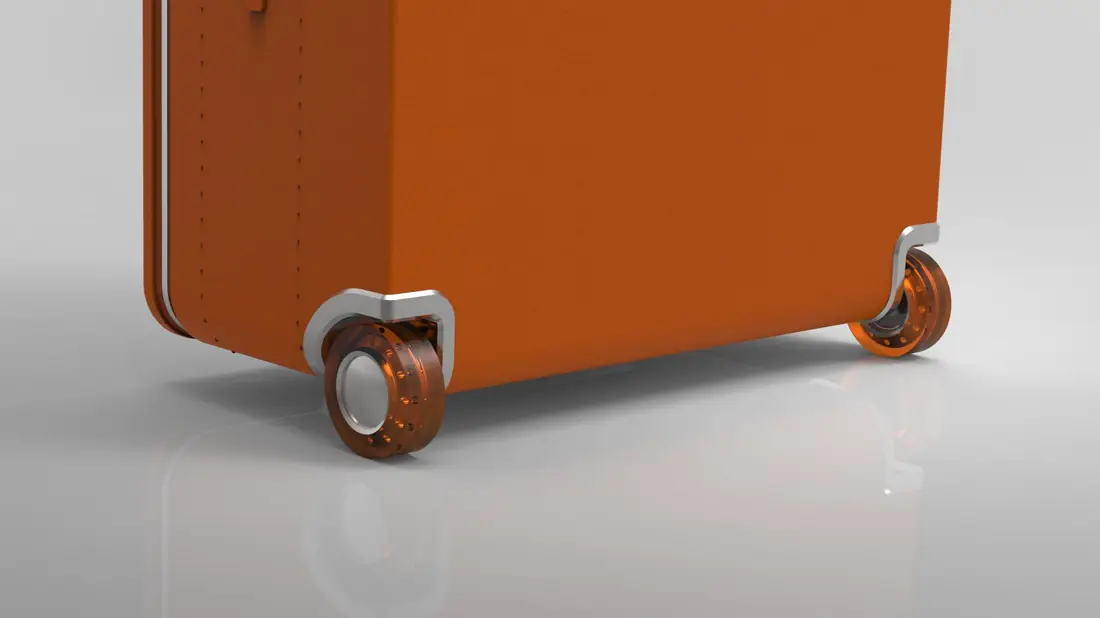
Two opening logics are tested on the same shell: multiple and tilting.
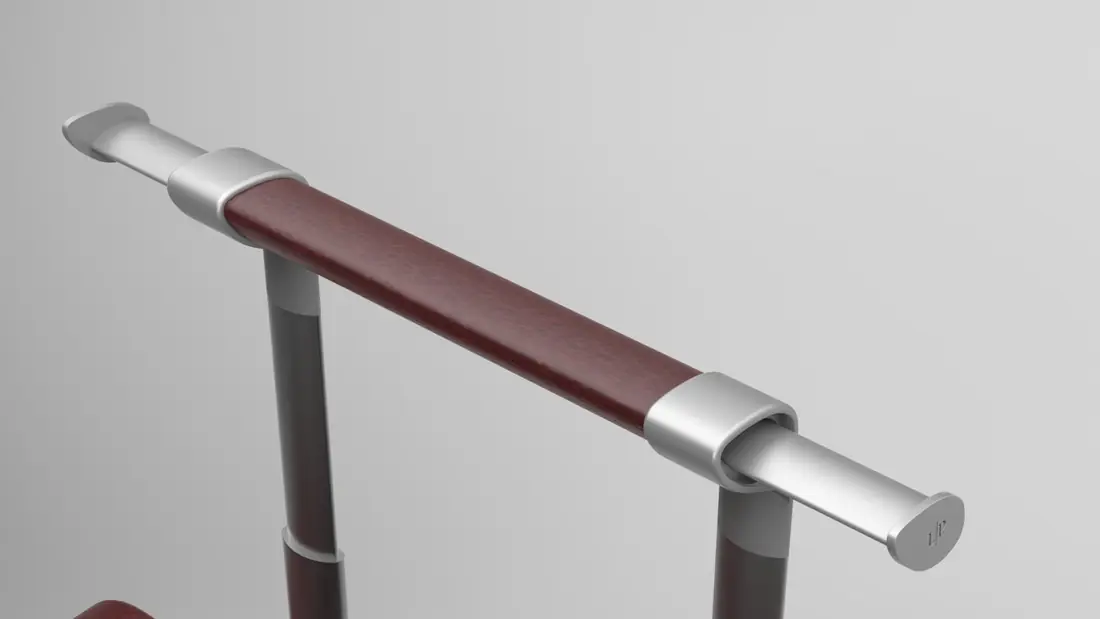
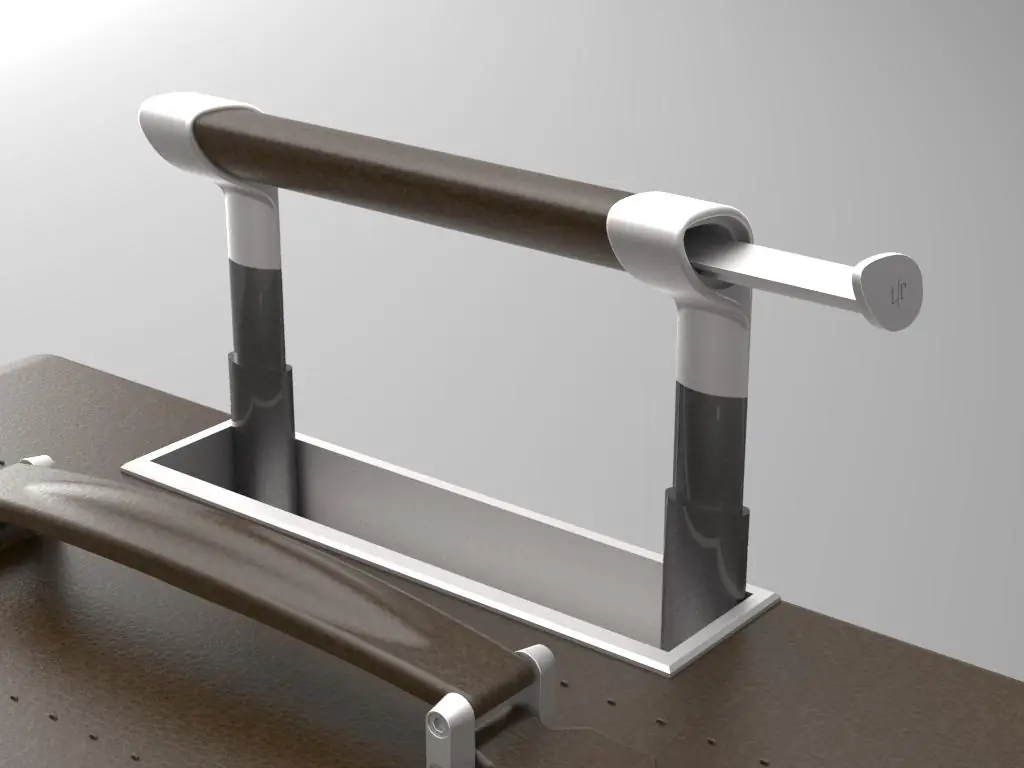
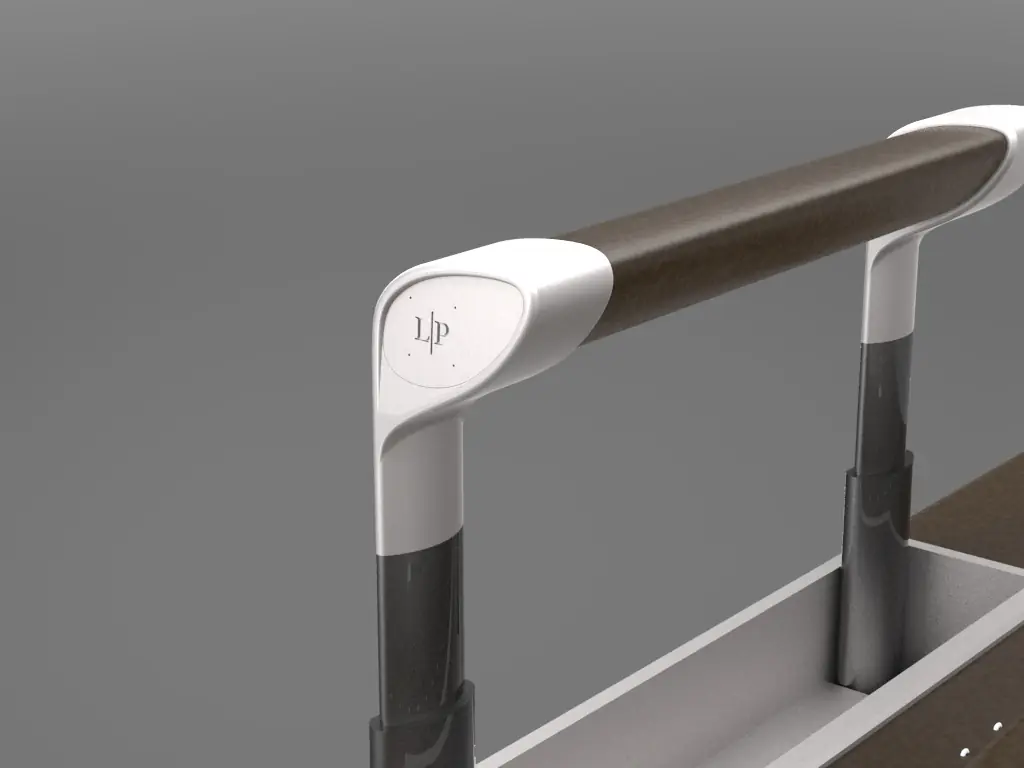
Once the architecture is chosen, the project moves into mechanics: handle bridge, telescopic tubes, wheel fork.
The grip bar does not stop at the collars: it continues and becomes the hook meant for the soft bag.
One component. Two functions. Nothing added.
Soft bags in deerskin
Deerskin will not take a rigid structure: it lives off its own softness.
That is why the construction starts at the handle and works down towards the volume. Plate anchors spread the load over a naturally deformable leather.
The hardware belongs to the same family as the luggage, but lightened. Even the size of the bag is born in relation to the trolley hook.
Hard and soft do not imitate each other. They recognise each other.
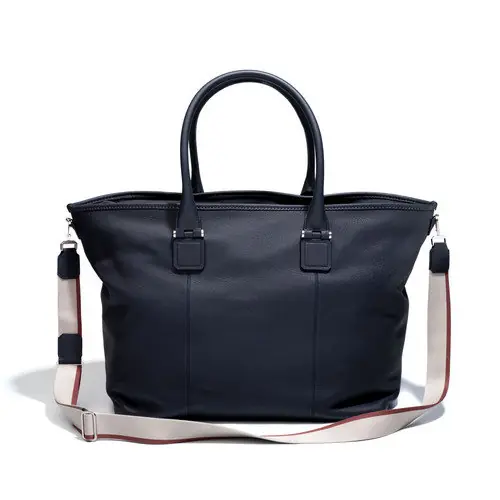
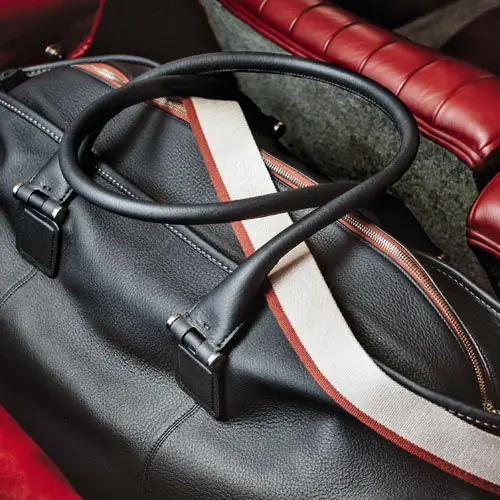
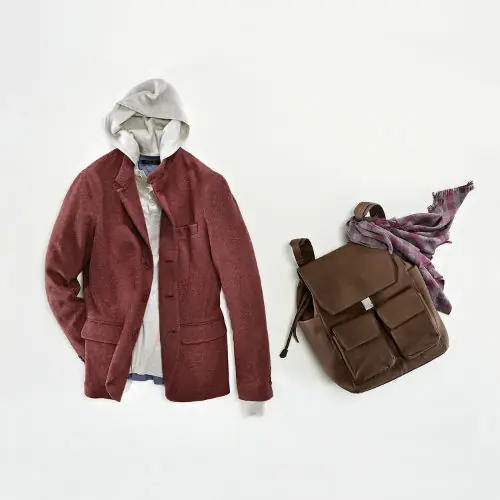
Louis Vuitton — Travel concept study
When frame, handle and wheel become a single gesture.
Exploratory study commissioned by the maison.
The theme is structural continuity: handle bridge, wheel fork and shell junction are read as parts of a single frame.
The form does not come from decorating the volume, but from the relationship between the elements that let the object be lifted, pulled and protected.
Colour and finish come afterwards. Architecture comes first.
Mandarina Duck — Product DNA
The material changes. The architecture stays recognisable.
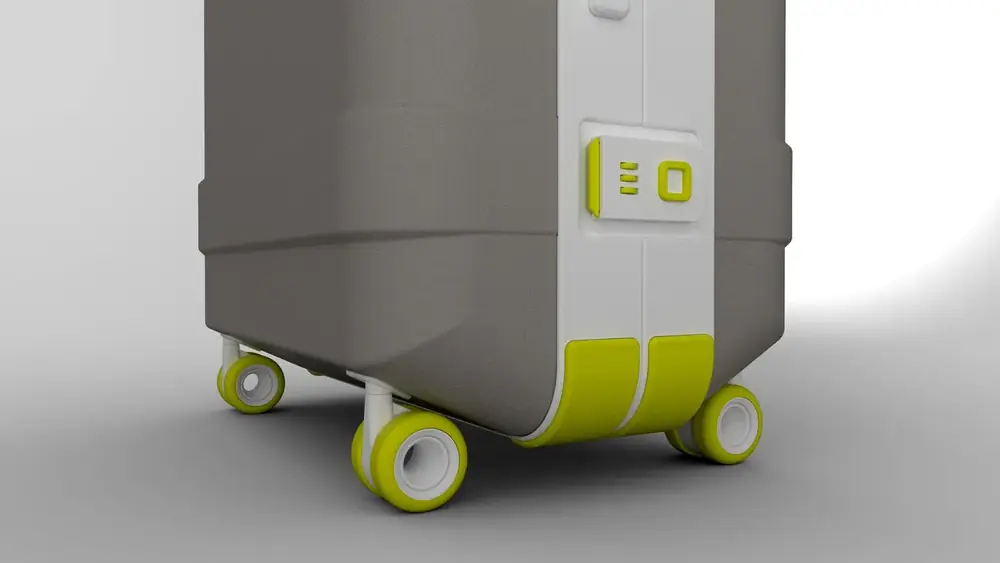
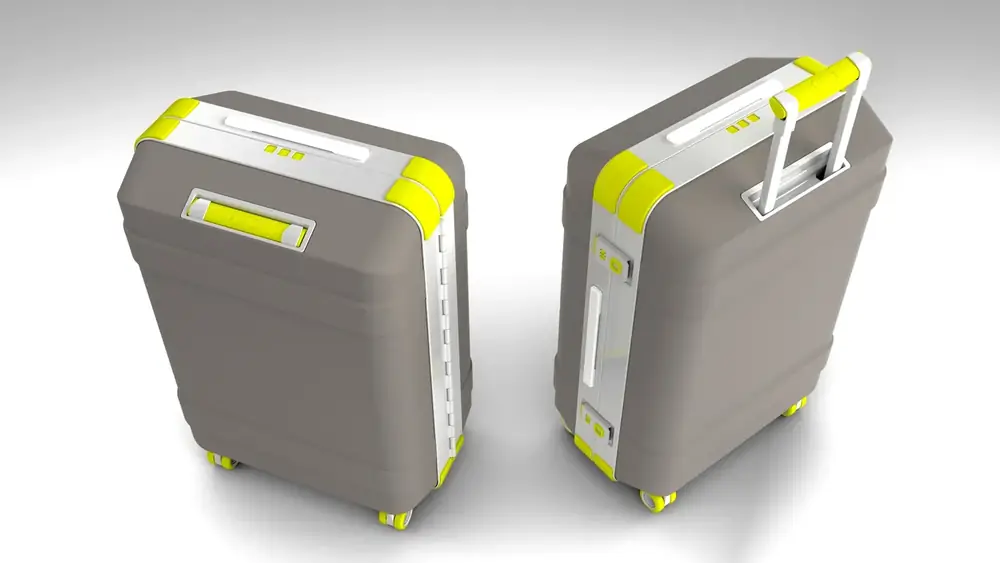
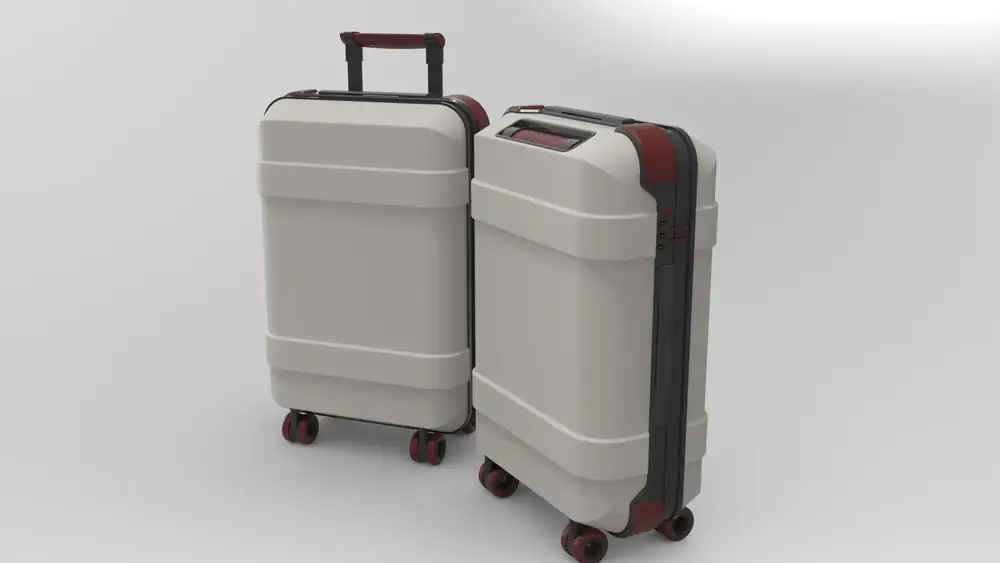
The same luggage structure is explored through three material registers: technopolymer with contrasting hardware, pale shell with burgundy components, satin aluminium with perimeter frame.
The skin of the object changes. The principle that builds it does not.
Handle bridge, rear column, wheel housings and protective band remain constant elements.
Product DNA is not a shape to repeat. It is a principle able to survive change.
Role: product development and research.
Clients
Clients
The ARKTP character
Curious — not trend-driven
We look for what generates change, before it becomes visible.
Cultured — not academic
Culture is there to build better products, not more sophisticated presentations.
Radical — not destructive
We question habits in order to protect what truly belongs to the identity.
Grafted — not decorative
We bring other languages into a project only when they introduce transferable intelligence.
Strategic — but material
A vision is incomplete until we know how to build it.
Authorial — but not self-referential
We do not impose a style on the maison. We look for the possible future of its language.
Our signature should not show. What should show is the maison, able to speak to its own time.
Profile
One founder. The drawing and the path that makes it real, held by the same hand.
 CHT
CHT
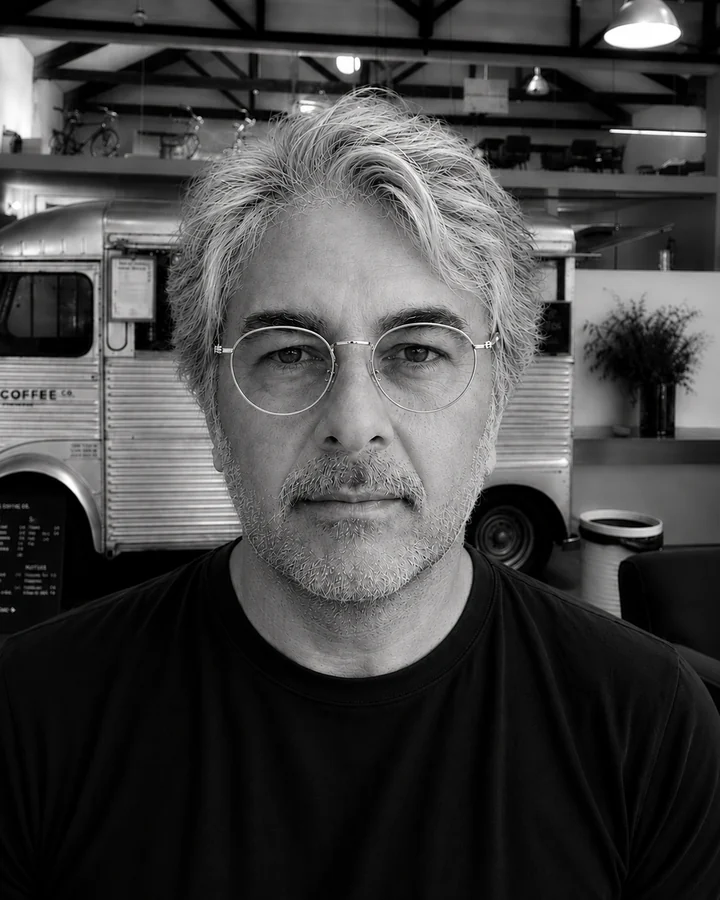
Cesar Horacio Tartuferi
Founder · CEO · Creative and product direction
Born in Buenos Aires in 1963, he came to Italy very young and trained at the Accademia di Belle Arti. His first research was in informal art, where form and meaning arise from material, from gesture, from the tension between elements.
From 1986 that same research entered industrial design. The scale, the tools and the constraints change, but not the question: what gives a form its meaning?
Forty years followed, across concept, product and industry, working for maisons and manufacturers in Italy, France and Spain, through fashion, automotive and technical sportswear.
Experience that builds a method transversal by nature. Materials, technologies and processes migrate from one sector to another: what begins in technical equipment as a functional necessity can become a new language in luxury; what belongs to industrial precision can meet the intelligence of artisanal manufacture.
It is precisely in the tension between craftsmanship and high technology, culture and industry, intuition and feasibility that his way of designing takes shape.
He does not start from style. He looks for the principle that generates a project, defines its language and carries it through material, construction and process.
To the point where an intuition becomes a product.
- Creative direction
- Product development
- Materials research
- Industrialisation
- Project management
- Product planning
- Supplier network
- Costing and delivery